In many modern homes, particularly smaller modern homes, structure no longer disappears behind layers of finish. Beams, posts, and load-bearing elements are increasingly left visible, shaping interiors as deliberately as walls or windows. This shift reflects a broader design approach that values clarity, material honesty, and spaces that are rooted in their construction.
Rather than relying on surface treatments to establish character, contemporary residential design often allows structure to play an active role. When integrated with care, exposed systems influence how rooms connect, how light travels through a space, and how the home is experienced over time.
Understanding Exposed Structural Systems
Exposed structural systems refer to load-bearing elements that remain visible within the finished interior. These elements may include beams, columns, trusses, or frames made from timber, steel, or concrete. Rather than being concealed behind ceilings or partitions, they are integrated into the home’s visual order.
In residential architecture, this approach strengthens the relationship between form and function. Structural components establish rhythm and proportion, often guiding how spaces are organized and understood. The result is an interior that feels deliberate and legible, in which the building’s framework contributes directly to the spatial experience.
Visibility does not suggest an unfinished aesthetic. In many modern homes, exposed systems are precisely detailed and paired with restrained finishes, creating interiors that feel composed rather than raw.
Why Modern Design Favors Visible Structure
Modern residential design tends to emphasize openness and continuity. Exposed structural systems support these goals by reducing the need for visual breaks and enabling larger spans and more flexible layouts. When structure is clearly expressed, spaces often feel calmer and easier to read.
Material honesty also plays a role. Allowing a building’s framework to remain visible aligns with contemporary preferences for durability and authenticity. Rather than relying on applied finishes to generate interest, designers use proportion, light, and structure to shape the atmosphere.
This approach is particularly well-suited to minimalist and prefab-influenced homes, where efficiency and clarity guide design decisions. Visible structure adds character without visual excess, giving even compact interiors a sense of depth and permanence. In modern small homes, where every design decision carries more visual weight, exposed structure often replaces decorative elements altogether.
Timber Structures in Contemporary Residential Design
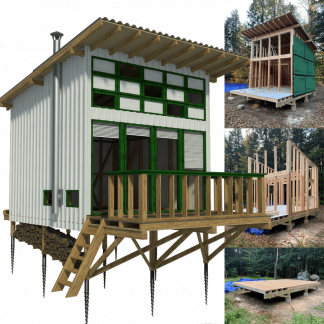
Among the materials used for exposed structural systems, timber holds a distinct place in modern residential architecture. Its texture and scale introduce warmth, offering contrast to the clean lines and restrained palettes common in contemporary homes. When left visible, timber elements can define space without enclosing it, a quality that becomes especially valuable in modern small homes, shaping interiors through structure rather than surface.
In contemporary residential projects, exposed timber structures often draw on traditional framing principles adapted to modern spatial planning. This relationship becomes clearest when the structure is treated as the organizing element rather than decoration. Conventional framing methods continue to inform modern residential design, and in the work of Tuscarora Timber Frame, exposed timber structures and proportion support open, contemporary interiors.
When integrated with intention, timber framing contributes to both atmosphere and spatial order. Beams and posts establish scale, guide movement, and create continuity across rooms, allowing modern homes to feel open while maintaining a clear structural presence.
Exposed Structure in Prefabricated and Modular Homes
Prefabricated and modular homes often rely on clear structural logic to achieve consistency and efficiency. In these contexts, exposed structural systems tend to emerge naturally from the design, manufacture, and assembly of components rather than being added for visual effect. Structure is part of the architectural language because it reflects how the building is assembled.
This clarity is particularly relevant in small prefab and modular homes, where efficient layouts depend on systems that serve both structural and spatial roles. Leaving key elements visible can simplify construction while reinforcing spatial clarity. Frames and support members help organize interiors, making layouts easier to understand and reducing reliance on additional finishes. This approach aligns closely with prefabricated housing, where precision and repeatability shape both form and function.
Architectural discussion increasingly treats modular construction as a long-term building approach rather than a temporary solution. Conversations about modular construction as a new building paradigm highlight how clearly articulated structural systems support coherence, flexibility, and consistency in contemporary housing.
In modular and prefab homes, exposed structure also supports adaptability. When the framework remains legible, spaces can evolve without undermining the overall architectural logic.
Practical Considerations of Living With Exposed Structure
Living with exposed structural systems shapes daily experience in subtle ways. Acoustics can change when beams and frames remain visible, particularly in open interiors where sound carries more freely. Material choice and spatial proportions often determine whether these environments feel balanced or overly reverberant.
Maintenance is another factor. Visible structural elements age alongside the home, making wear more noticeable over time. In many modern residences, this change is treated as part of the material character rather than a flaw, especially when natural materials are used thoughtfully.
Thermal comfort also intersects with structural exposure. While the framework defines spatial order, insulation and enclosure strategies remain central to performance. When carefully coordinated, exposed structure can coexist comfortably with contemporary expectations regarding energy use and livability.
Structural Honesty and Long-Term Design Value
Exposed structural systems often contribute to architectural continuity over time. When the framework remains visible, it provides a stable reference for how spaces are organized and how they may adapt as needs change. This clarity supports homes that remain coherent beyond their original layout.
In housing designed for compact or evolving living arrangements, structure frequently acts as the fixed element around which interiors develop. This relationship between clear structural logic and adaptability is evident in discussions around tiny homes designed for flexible living, where efficient spatial planning allows small dwellings to respond to changing use without losing coherence.
By maintaining a structural framework within the living environment, modern homes can retain a consistent architectural identity even as finishes and furnishings change. This continuity reinforces the value of construction systems that remain legible and supportive over the long term.
Conclusion
Exposed structural systems continue to influence modern home design through clarity, material expression, and spatial order. By allowing the building’s structural framework to remain visible, designers create interiors that feel grounded in their construction rather than shaped solely by surface treatments.
Whether expressed through timber, steel, or modular frameworks, visible structure reinforces a direct relationship between construction and everyday living. This approach supports homes that are easier to understand, adapt to, and inhabit over time.
In contemporary residential design, structure is increasingly treated as part of the lived experience. When integrated with care, it contributes to spaces that are cohesive, durable, and responsive to how people live now and in the future.