A failed FISP facade inspection can create serious stress for NYC property owners, co-op boards, building managers, and landlords. It often means the building has visible exterior conditions that need repair, maintenance, or further review before the facade can be considered compliant.
In many brick buildings across New York City, one of the most common issues behind facade concerns is damaged mortar. Cracked, loose, missing, or weathered mortar joints may seem minor at first, but they can allow water to enter the wall system, weaken the brickwork, and increase the risk of more expensive exterior damage.
That is where brick repointing becomes important. It does not fix every facade issue, but it can correct many masonry-related conditions that appear during a FISP inspection.
What Does a Failed FISP Facade Inspection Mean?
New York City’s Facade Inspection Safety Program applies to buildings higher than six stories. Under the program, exterior walls and related facade elements must be inspected by a qualified professional and reported to the Department of Buildings on a recurring cycle.
A facade inspection may result in different findings depending on the condition of the building. Some buildings pass without major issues, while others receive repair-related classifications because certain areas are unsafe, deteriorated, or likely to become unsafe if left untreated.
For brick buildings, the inspection may identify problems such as open mortar joints, cracks, displaced brickwork, water damage, spalling, bulging masonry, loose materials, or signs of poor previous repairs. These issues can affect both safety and long-term building performance.
If your building recently failed a facade inspection NYC, the next step is not to guess the repair. The right approach is to understand what caused the failure and whether the issue is related to mortar, brickwork, structural movement, water infiltration, or a combination of conditions.
Why Brick Mortar Fails in NYC Buildings
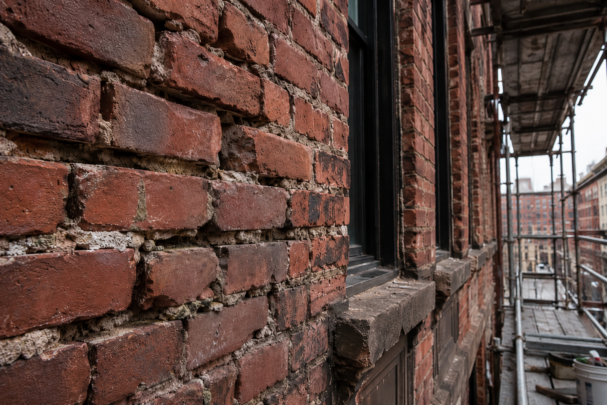
Brick mortar is exposed to constant stress in New York City. Older buildings deal with decades of rain, snow, freeze-thaw cycles, pollution, temperature changes, and moisture movement. Over time, the mortar between bricks naturally begins to wear down.
Once mortar becomes weak, it can crack, wash out, or separate from the brick edges. These gaps allow moisture to enter the wall. During colder months, trapped water can freeze and expand, making cracks wider and causing more damage around the brick face.
In dense NYC neighborhoods, facade exposure also varies by location. A brick wall facing heavy wind, shaded courtyards, roof runoff, or poor drainage may deteriorate faster than other parts of the same building. That is why FISP-related masonry repairs often require careful inspection instead of surface-level patching.
What Brick Repointing Actually Fixes
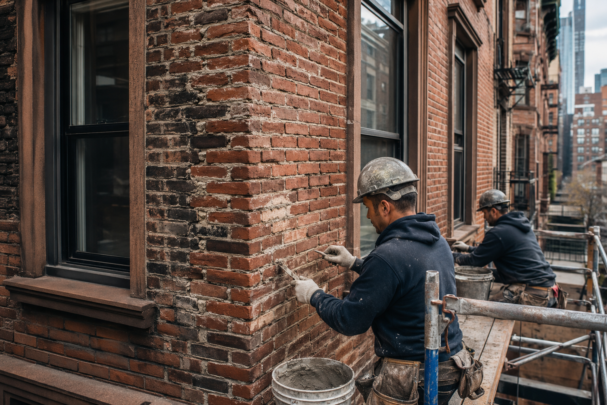
Brick repointing is the process of removing damaged mortar from the joints and replacing it with new mortar that matches the building’s masonry needs. When done properly, it restores the joints, improves water resistance, and helps stabilize the brickwork.
Repointing may help correct several conditions that can appear in a FISP report, including:
- Cracked mortar joints
- Missing or loose mortar
- Open joints that allow water entry
- Weathered mortar around brick facades
- Deteriorated masonry joints near windows, parapets, and corners
- Localized water-related masonry damage
- Poor previous pointing work that has failed
This is why brick pointing in NYC is often part of facade repair planning after an inspection. It directly addresses the mortar joints that protect the wall from moisture and movement.
How Repointing Helps With Water Infiltration
Water is one of the biggest reasons brick facades deteriorate. Once moisture enters through damaged mortar joints, it can move behind the brick surface and affect the wall system from the inside.
Over time, this can lead to stains, interior leaks, efflorescence, brick face damage, and deeper masonry problems. In some cases, water infiltration can also make existing cracks worse.
Brick repointing helps close those entry points. By replacing failed mortar with properly installed new mortar, the wall becomes better protected against rain, snow, and trapped moisture. This does not replace waterproofing where waterproofing is needed, but it is often a necessary first step in controlling moisture problems in brick facades.
Why Matching the Mortar Matters
Not all mortar is the same. NYC has many older brick buildings, brownstones, pre-war structures, and historic facades that require careful material selection.
Using mortar that is too hard can damage older bricks. Instead of allowing normal movement, hard mortar can put pressure on the brick face and cause cracking or spalling. Using the wrong color or texture can also make the repair stand out visually, which may be a concern for historic or visible street-facing facades.
Proper repointing should consider the age of the building, the condition of the brick, exposure level, joint style, and existing mortar profile. A repair that looks clean on day one but fails after one winter is not a good repair.
Brick Repointing vs Surface Patching
One common mistake is treating failed mortar with quick surface patching. This may hide the problem temporarily, but it usually does not remove the damaged material behind the surface.
True repointing requires cutting or grinding out deteriorated mortar to the proper depth, cleaning the joint, and installing new mortar carefully. The goal is not just to make the wall look better. The goal is to restore the joint so it performs correctly.
For FISP-related repairs, this distinction matters. A superficial patch may not satisfy the actual condition noted in the inspection report, especially if the underlying joint remains weak or open.
Areas Where Repointing Is Often Needed After FISP Findings
Brick repointing is commonly needed in areas that receive more exposure or movement. These include parapet walls, roofline masonry, window surrounds, corners, chimney areas, rear elevations, and walls affected by drainage problems.
Parapets are especially vulnerable because they are exposed from multiple sides. If coping stones, flashing, or joints fail, water can enter from the top and accelerate mortar decay below.
Window areas are another common trouble spot. Open joints around lintels, sills, and window perimeters can allow water to enter and travel into interior spaces. In many NYC buildings, leaks that appear inside apartments may begin with small exterior masonry failures.
When Repointing Is Not Enough
Brick repointing is highly useful, but it is not a solution for every facade issue. If the wall has major structural movement, severely displaced brickwork, failing lintels, loose terra cotta, damaged steel, or large unstable areas, repointing alone may not resolve the problem.
In those cases, a building may need brick replacement, lintel repair, parapet rebuilding, waterproofing, flashing correction, or broader facade restoration. The repair scope should match the actual findings in the FISP report.
This is why property owners should avoid assuming that every failed inspection only needs pointing. The best repair plan starts with the report, the inspection notes, and a close review of the affected facade areas.
Why Timely Masonry Repair Matters
Delaying mortar repairs can make the problem more expensive. Small open joints can turn into wider cracks, water damage can spread, and loose masonry conditions can become more serious over time.
For NYC building owners, delay can also mean longer sidewalk shed use, repeated inspections, added professional fees, tenant complaints, and possible compliance issues. Timely repointing helps reduce the chance of minor masonry deterioration becoming a larger facade repair project.
It also protects the value and appearance of the building. Clean, well-maintained brickwork gives the exterior a stronger, safer, and more cared-for appearance without changing the character of the property.
What Property Owners Should Do After a Failed Inspection
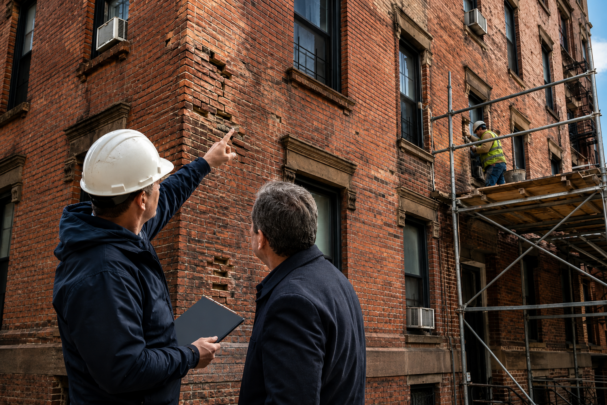
After a failed FISP inspection, the first step is to review the report carefully with the building’s qualified professional. The report should help identify whether the issue is related to mortar deterioration, loose brickwork, cracks, water entry, or another facade condition.
Once the repair areas are clear, the building owner or manager should get a masonry-focused repair plan. For brick buildings, this often includes checking the mortar joints, identifying damaged brick units, reviewing water entry points, and confirming whether repointing is enough or if additional repair work is needed.
A good repair plan should answer three questions:
- What caused the facade condition?
- What repair method will correct it properly?
- What can prevent the same issue from returning?
Final Thoughts
A failed FISP facade inspection does not always mean the entire facade is in poor condition. In many NYC brick buildings, the issue may be connected to deteriorated mortar, open joints, localized water damage, or weathered masonry areas that can be corrected through proper brick repointing.
Repointing helps restore the protective function of mortar joints, reduce water entry, improve facade durability, and support long-term masonry maintenance. For NYC property owners, it is not just a cosmetic repair. It is an important part of keeping brick buildings safer, stronger, and better prepared for future inspection cycles.
FAQs
What happens if a building fails a FISP facade inspection in NYC?
It means the facade has unsafe, damaged, or repair-needed conditions. The owner should review the report and complete required repairs on time.
Can brick repointing help fix FISP facade issues?
Yes, it can fix mortar-related issues like cracked, missing, or loose joints. Serious structural damage may need additional facade repairs.
Why is damaged mortar a problem for NYC brick buildings?
Damaged mortar lets water enter the wall and weaken the brickwork. In NYC winters, freeze-thaw cycles can make the damage worse.
Is brick repointing the same as brick pointing?
They are often used similarly, but repointing usually means removing old mortar and replacing it. Pointing can also mean finishing the mortar joints.
When should NYC property owners schedule brick repointing?
Schedule it when mortar is cracked, missing, loose, or causing leaks. Early repairs help prevent larger facade problems.