The old saying goes that ‘home is where the heart is’, but increasingly, home isn’t necessarily where the address book is. When we think of space, we often consider its scale and how its volume physically dictates how much space is available to occupy. Lately, however, there is growing dissatisfaction with the current consensus on space, which champions the mantra of ‘bigger is better,’ and people are beginning to seek out spaces that are cleverly utilized and intensely experienced.
Micro-homes are nothing new: tiny attic rooms, small garrets, cramped recesses have always existed in larger houses, and ‘micro-homes’ is a term used to describe these cramped abodes. But today the ‘micro-home’ has a new meaning. The small space is not just small; it is so small that it forces occupants to redefine what is enough and, more importantly, what is good living.
Rethinking Space and Purpose
At the center of this movement lies a deceptively simple question: What is truly essential?
For years, residential design has leaned toward accumulation. Additional rooms, expanded storage, layered conveniences. Over time, however, that abundance has revealed its hidden costs. Financial strain, ongoing maintenance, and a subtle but persistent sense of overwhelm have all grown in parallel with square footage.
Micro-dwellings offer a deliberate counterpoint. They shift the focus from expansion to intention. Each element is considered, each function integrated. Storage is not appended but embedded. Furnishings are not static but adaptive, often serving multiple roles within a single, cohesive system.
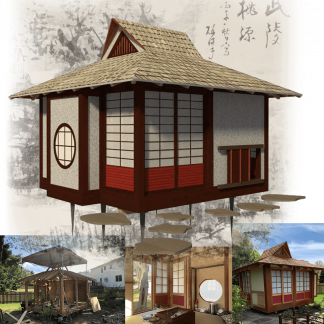
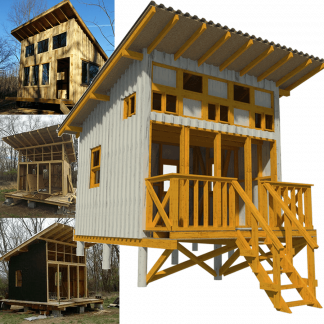
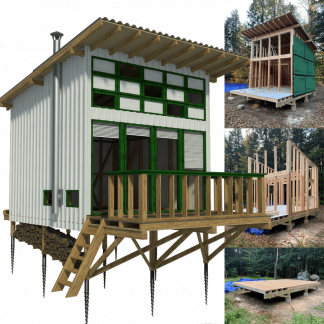
And within the more refined expressions of this approach, concepts like park model cabins begin to illustrate what is possible when compact living is approached with both architectural sensitivity and human awareness, spaces that feel complete rather than constrained, intentional rather than improvised.
Design That Works With You
What distinguishes these spaces is not merely their reduced footprint, but the intelligence embedded within their design. A thoughtfully executed micro-dwelling anticipates behavior. It accounts for movement, habit, and rhythm. Natural light is orchestrated to expand perception, while carefully positioned openings create a dialogue between interior and exterior environments. Things are picked for more than just how they look; they’re also chosen for how they feel, how they react to heat or cold, and how they change over time. There is a quiet precision at work. The space supports rather than interrupts. Daily actions unfold with less resistance, less friction. Over time, this creates an environment in which attention shifts away from managing the space and toward experiencing life within it.
The Emotional Shift Toward Less
The decision to embrace a smaller living environment is rarely rooted solely in practicality. It often carries emotional weight. Lots of people start to realize that having more of something doesn’t always make it better. Sometimes, getting more stuff can actually make things worse rather than better. It’s like, the more you accumulate, the more it can get in the way and make it harder to see what’s really important. Micro-dwellings meet that realization with a tangible alternative.
These moments allow us to take a step back and re-evaluate our priorities. It’s a chance to move away from the constant pressure to keep pushing forward and instead, focus on what’s truly important to us. The goal isn’t just to cut back on things, but to refine our lives, to figure out what really makes us feel calm and clear-headed. By doing so, we can create a more intentional way of living, one that’s based on what truly adds value to our lives, rather than just going through the motions. This process of refinement helps us identify what’s essential and what’s not, allowing us to make conscious choices about how we want to live our lives. And in that process, something shifts.
Sustainability as an Embedded Principle
Sustainability, within the context of micro-dwellings, rarely presents itself as an added feature. Instead, it emerges as a natural consequence of thoughtful design. Having a smaller footprint means using fewer resources, which is good for the environment. This is true for both building something and using it over time. It also means using less energy, which is a big plus. Things start working better, and we waste less, so we’re more careful about what we use. It is not driven by strict adherence to environmental ideals, but by structural alignment. When we think carefully about how we use space, it shows in the way we do things. Our habits and routines start to mirror the attention we give to the space around us.
Flexibility in a Fluid World
Contemporary life is increasingly defined by change. Career paths evolve. Locations shift. Priorities are recalibrated over time. The traditional notion of permanence, particularly in housing, no longer holds the same universal appeal. Micro-dwellings offer a response to this fluidity. These kinds of spaces are really flexible, which is something that bigger, more traditional structures often can’t match. You can change them up, move them around, or completely rethink how they’re used, and it’s easy. For example, a space that’s a main home at one point in your life could later become a studio for creative work, a quiet retreat, or even a second home – it’s all about adapting to your needs as they change over time. There is a quiet resilience embedded in that versatility.
Aesthetic Without Excess
One thing that really stands out about tiny homes today is how simple and clean they look. In this case, minimalism isn’t about having nothing; it’s actually about being very intentional with what you have. Things that make up a space, like materials and textures, are given room to stand out. One simple thing is important. By removing excess visual elements, people can express their own style more clearly. In many ways, limitation becomes a catalyst for creativity. When you have fewer things to consider, each choice you make is more important and can have a bigger impact.
The Community Dimension
Interestingly, a reduction in private space often corresponds to an expansion of shared experience. Living in small spaces helps people meet and talk to each other. This can happen in areas meant for sharing, such as outdoor spaces or communal rooms. Even the way the space is laid out can make a difference, such as making it easy to walk around and avoid running into others. The home, in this context, becomes less of an isolated container and more of a point of departure—a place to return to, rather than retreat from the world.
Challenges Worth Considering
You can’t really talk about micro-dwellings without mentioning their limitations. They demand a certain level of discipline. Organization is not optional. Clutter becomes immediately visible. And the transition from a larger living space can require both practical and psychological adjustment. External factors also come into play. Regulatory frameworks, zoning restrictions, and infrastructure limitations can affect feasibility by location. For many people, these challenges are a big part of what makes the experience so worthwhile, rather than something that would stop them from doing it. They bring a sense of awareness that we can easily overlook in bigger spaces.
A Return to Intentional Living
The increasing popularity of tiny homes is more than just a fleeting design fad; it reveals a deeper shift in the way we think about living spaces. It signals a shift in perspective. A movement away from unquestioned expansion and toward deliberate choice. Toward environments that support, rather than complicate, the way we want to live. The question is no longer how much space we can occupy. But how thoughtfully we can inhabit it. And for a growing number of people, the answer is becoming increasingly clear.