Quick Answer
Blinds for large windows work best when the system matches the span. Vertical blinds and panel tracks glide across wide openings without sagging, while motorized controls handle heights no arm can reach. For a tall wall of glass, prioritize weight-rated hardware, custom sizing to the exact opening, and a fabric that softens strong daylight rather than fighting it.
Introduction
Oversized glass looks effortless until the window covering has to span three metres of it. A treatment sized for a standard opening starts to sag, stack unevenly, or stall halfway across, and the hardware wears out faster because every pull drags more weight. That is the real problem with blinds for big windows—and a frequent consideration when outfitting modern DIY builds from Pin-Up Houses cabin plans: the engineering, not the colour swatch, decides whether the finished job lasts.
Getting it right means working to the opening itself, not to a stock size pulled off a shelf. That is where custom blinds for large windows earn their keep, cut to the measured width and dropped with hardware rated for the load. A professional measure accounts for frame depth, mounting style, and the small tolerances that keep vanes hanging straight.
What Makes Large and Floor-to-Ceiling Windows Different
A covering that performs on a modest opening behaves differently once the glass climbs from the floor upward. Width adds weight, height adds reach, and both reshape how a treatment hangs and holds over time.
Span, Weight, and Why Standard Treatments Sag
A slat cut for a one-metre opening carries almost no load. Stretch that same product across a wide picture window and the mass multiplies, bowing anything not built for it. Blinds for floor to ceiling windows add a long vertical drop, where gravity pulls on every vane at once. Three factors drive the droop:
- Material density, since aluminum, vinyl, and fabric each carry mass differently
- Headrail strength and bracket spacing across the full run
- Vane length, which lengthens the lever arm on the mechanism
Light Control Across a Wall of Glass
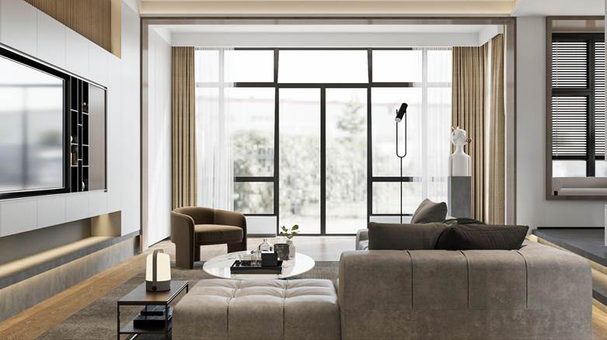
Expansive glazing floods a room with daylight that shifts hour by hour. One opaque panel either blocks the view or surrenders to glare, so adjustable control usually wins. Vanes that tilt angle the sun without erasing the outlook, and that matters most on a west-facing wall through the afternoon.
Styles That Hold Up on Wide and Tall Openings
With the physics settled, the question turns to which systems carry the strain. The strongest performers glide and balance weight along the track rather than fight the drop.
Vertical Systems and Panel Tracks for Width
For sheer breadth, vertical blinds for large windows stay the reliable pick. The vanes hang from a top track and draw sideways, so load travels along the headrail instead of straight down. Panel tracks apply the same idea with broad sections that stack neatly aside, clearing a sweeping view in one motion.
Where a Single Treatment Has to Be Split
Here is the detail most ranking guides leave out. Every system hits a maximum width before one unit binds, and past roughly 2.7 to 3 metres a single headrail begins to deflect. The fix divides the opening into coupled sections on a shared track. Watch for these triggers:
- Width beyond the manufacturer’s single-unit rating
- Stack-back so deep it swallows part of the glass
- A centre meeting point that suits a pair of patio doors
- Uneven framing that throws off a one-piece order
Custom Fabrication and Professional Measuring
Stock sizing rarely fits a feature window. Large window blinds built to the measured frame respect depth, mount style, and the eighth-of-an-inch tolerances that keep panels square. A trained measure catches the deflection point early and specifies the division before fabrication, not after the installer arrives.
Keeping Oversized Coverings Working for Years
A feature window is a long-term investment, and its covering should match that horizon. Upkeep and operation decide whether a wide treatment still glides smoothly in year five.
Cleaning and Upkeep by Material
Maintenance scales with size. A tall vane gathers more dust and takes more effort to reach, so the material should suit how often you will clean it. The table below sets the common choices side by side.
| Material | Cleaning effort | Best suited to |
| Vinyl vanes | Wipe with a damp cloth | High-traffic rooms and kitchens |
| Fabric vanes | Light vacuum, occasional spot clean | Living spaces wanting softness |
| Aluminum | Dust and wipe, resists moisture | Bright rooms with strong sun |
Pick the row that matches your routine, not only your decor.
Automation, Safety, and Long-Term Convenience
Height is the real case for powered operation. Motorized blinds for large windows remove the daily stretch to a track above head-height, and scheduled tilting shields furnishings from afternoon sun.
Pro Tip: On any tall opening, specify a cordless or powered system from the start. Retrofitting a motor onto a manual headrail often costs more than ordering it built in.
Powered designs also raise safety, since a cordless build removes the hanging pull that poses a hazard around children and pets.
The Payoff of Sizing an Oversized Window Correctly
A feature window rewards patience over impulse. Match the system to the span, respect the point where one unit has to become two, and choose a material you will actually keep clean. Hardware rated for the real load keeps the treatment square and quiet for years, long after the trend that inspired it has passed. Done this way, blinds for large windows stop being a recurring headache and start doing their quiet job.