Building off-grid comes with a long list of trade-offs, and one of the most underrated ones shows up the moment you need to lift something heavy. There’s no generator running yet, no outlet to plug a power tool into, and the nearest crane rental company is two hours away and quotes you more than your entire framing budget. This is exactly the point where most first-time off-grid builders hit a wall — and where a simple, century-old tool quietly saves the project: the manual chain hoist.
The Problem With Building Off-Grid
Off-grid and remote cabin sites are appealing for the same reasons they’re difficult to build on: no utility access, limited vehicle clearance, and often no way to bring in heavy machinery. A ridge beam, a loft floor joist, a water tank, or a stack of roofing panels still needs to go up — but you can’t always count on electricity, and a full-size crane usually can’t even reach the site.
This is where a lot of DIY builders either overpay for equipment they don’t need, or worse, try to muscle heavy loads into place by hand — which is how most on-site injuries happen during small house and cabin builds.
What a Manual Chain Hoist Actually Does
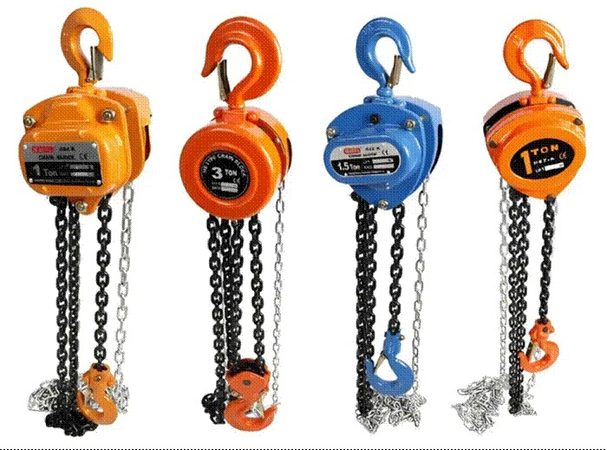
A hand chain hoist (sometimes called a chain block) is a simple mechanical device: you pull a hand chain, and through a gear-reduction system, it lifts or lowers a load hanging from a hook — no batteries, no power cord, no fuel. The mechanical advantage means one person can safely lift several hundred kilograms with steady, controlled pulls.
For off-grid builders, the appeal is straightforward:
- No power source required. It works identically on day one of a bare lot as it does with a fully wired workshop.
- Portable and lightweight. Most models used on small builds weigh under 15 kg and pack down small enough to carry in with your other tools.
- Precise, controlled lowering. Unlike a rope-and-pulley setup, a chain hoist locks in place at any height, so a beam won’t slip while you’re positioning it.
- Low cost relative to crane rental. A hoist is typically a one-time purchase that pays for itself on the very first lift.
Where It Fits Into a Small Cabin or Off-Grid Build
Roof trusses and ridge beams. Getting a ridge beam up to height alone is one of the most dangerous moments in a small-cabin build. Rigging a chain hoist to a temporary gin pole or an existing frame member lets one person raise the beam slowly and hold it steady while it’s secured — no second set of hands required.
Loft floor joists. In cabins with a loft, joists often need to be lifted and held in place while they’re nailed or bolted. A hoist anchored to the ridge or a rafter gives you a free hand to fasten instead of fighting gravity.
Moving heavy materials on site. Water tanks, wood stoves, batteries for solar setups, and pallets of siding all need to move from the truck to their final spot. On uneven or sloped off-grid lots, a chain hoist rigged to a tripod or overhead beam is often safer than trying to walk a heavy load across rough ground.
Container and modular builds. For anyone working with shipping-container conversions, chain hoists are commonly used for smaller adjustments — shifting internal fixtures, hanging insulation panels, or positioning doors and windows — once the container itself is already set on its foundation.
Wire Rope Hoists: The Step Up for Heavier Loads
For loads beyond what a hand chain hoist comfortably manages — or for repetitive lifts where speed matters — a wire rope hoist is the next tier up. These use a steel wire rope instead of chain and are usually powered (electric or hydraulic), which makes them faster and rated for significantly heavier loads. They’re common on larger off-grid projects that do have some power available, such as a generator running during the framing phase, or on container-house builds where entire modules need to be lifted into position rather than just individual materials.
The rule of thumb most small builders use: hand chain hoists for anything under a few hundred kilograms with no power on site; wire rope hoists once you have generator power and loads start exceeding what one person can safely crank by hand.
Choosing the Right Hoist for Your Build
A few practical questions to work through before buying:
- What’s the heaviest single lift you’ll realistically need? Size the hoist with a safety margin — most builders choose a capacity at least 25% above their heaviest anticipated load.
- Manual or powered? If your site has zero power access during the build phase, a hand chain hoist is the only realistic option. If a generator is already part of your plan, a wire rope hoist can speed up repetitive lifts.
- What will you anchor it to? A hoist is only as strong as its anchor point — a rated beam clamp, a temporary gin pole, or an engineered structural point, never an untested tree branch or unsecured ladder.
- Lift height needed. Standard chain lengths cover most small cabin and loft heights, but check the rated lift distance before buying if you’re working with a taller structure.
The Bottom Line
Off-grid building rewards resourcefulness, and a manual chain hoist is one of the simplest, most reliable tools for solving the “how do I lift this without power or a second person” problem that comes up on almost every small cabin or container build. It’s inexpensive, it doesn’t care whether the site has electricity, and it turns a two-person heavy lift into a job one person can do safely and under control.
Before your next framing day, it’s worth adding one to the toolkit — right alongside the level, the circular saw, and the tape measure.