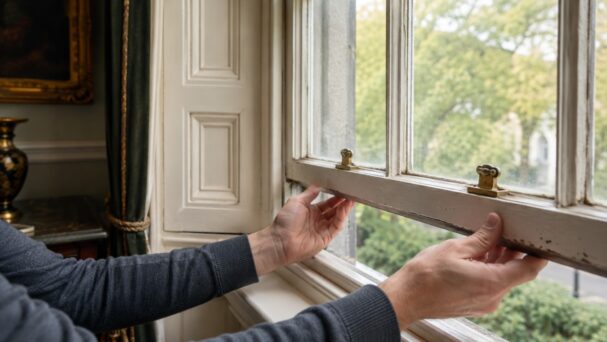
There is a very specific moment every owner of an old sash window knows. You place both hands on the frame, lift gently, and nothing happens. You try again, a little less gently. Still nothing. Then your eyes drift towards a screwdriver, a butter knife, perhaps even a hammer, and this is exactly where the window deserves a short emergency intervention.
A stuck sash window can be annoying, especially when the room needs fresh air, the paint is peeling, or the glass is misted with condensation after a cold night. But forcing it open is rarely the clever move. Old timber has memory, old paint has attitude, and original sash windows are built around a balance system that does not respond well to panic. Pull too hard in the wrong place and a simple repair can become broken glass, split timber or a sash that refuses to forgive you.
First Aid Rule: Stop Pulling
The first rule is simple: stop fighting the window. A sash that will not move is not just “being old”. It is giving you a clue. The problem might be paint build-up, swollen timber, broken sash cords, failed pulleys, a distorted frame, moisture in the lower rail or years of enthusiastic decoration sealing everything shut. Very often, the window is not dead. It is stuck for a reason.
This is why the best first step is not force, but observation. Look at where the sash meets the frame. Check whether the meeting rail is sealed with paint. See if one side sits lower than the other. Notice whether the timber looks swollen near the sill. Listen for rattling or scraping. If the window has become harder to use over time, it may be a slow maintenance issue rather than a sudden disaster.
If the Window Is Painted Shut
Painted-shut sash windows are extremely common in period homes. At some point, someone painted the room, painted the frame, painted a little more for good luck, and accidentally turned a moving window into a decorative wall feature. It probably looked lovely for a week. Then summer arrived, someone tried to open the window, and the crime was discovered.
If paint is the issue, the edges of the sash may be sealed along the staff beads, parting beads, meeting rail or sill. The temptation is to cut, scrape and lever until something gives. That “something” may unfortunately be the glazing bar, the paint finish or a chunk of timber. Careful release is possible, but it needs patience and the right touch. The aim is to free the sash, not punish it for being trapped.
If the Timber Has Swollen
Timber moves. That is not a flaw; it is part of being timber. In damp weather, poorly protected wood can swell. In dry weather, it may shrink back. If your sash opens beautifully in July but stages a full rebellion in November, moisture may be part of the problem.
Swelling often points to failed paint, exposed timber, damp sills, poor drainage or small gaps where water has been allowed to sit. The sash may drag at the sides, scrape along the frame or refuse to close fully. In this case, simply sanding the tight spot may not solve the real issue. If water is getting into the timber, the window needs repair and protection, not just a quick shave and a hopeful smile.
If the Window Opens but Will Not Stay Up
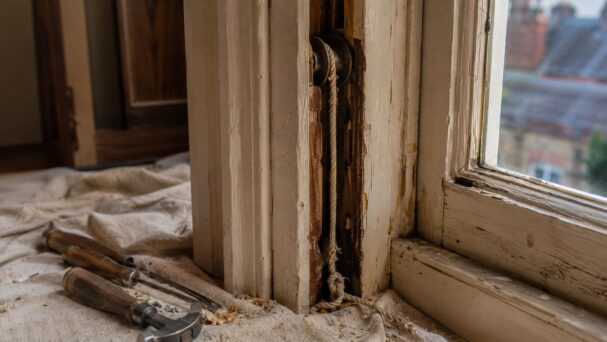
A sash window should not need to be held open with a book, a plant pot or blind optimism. If it drops as soon as you let go, the balance system is not doing its job. That usually means the sash cords, weights or pulleys need attention.
Traditional sash windows work because hidden counterweights balance the weight of the sash. When cords snap or weights are missing, the window becomes awkward, unsafe and deeply annoying. A dropping sash is not just inconvenient; it can catch fingers, damage the frame and make everyday use feel like a small negotiation with gravity.
When a Quick Fix Can Make Things Worse
Old windows attract bad DIY ideas the way kitchens attract that one drawer full of mystery cables. Too much oil can stain timber and attract dirt. Forcing the sash can crack glass. Levering near glazing bars can split delicate sections. Cutting through paint too aggressively can scar the frame. Removing beads without understanding the sash balance system can turn a stuck window into a much bigger puzzle.
That does not mean homeowners should never do anything. Gentle cleaning, checking for obvious paint seals and keeping frames maintained are all sensible. But when a sash is stuck, swollen, dropping, rattling or refusing to close squarely, an inspection from Scott James Windows can show whether the window needs releasing, cord repair, draught-proofing, timber repair or fuller refurbishment.
What a Proper Repair Should Restore
A good sash window repair should do more than make the window open once. It should restore movement, balance and confidence. The sash should slide more smoothly. It should stay open when raised. It should close properly without needing a shoulder behind it. Draughts and rattles may also reduce if the window is repaired and sealed correctly.
This is the difference between a quick rescue and a proper repair. A quick rescue gets the window moving today. A proper repair helps it keep working tomorrow, next winter and the winter after that. With original timber sash windows, that matters. These windows were designed to be maintained, not thrown away at the first sign of drama.
Before You Replace a Stuck Sash Window
A stuck sash window can feel like proof that the whole thing has failed, but that is often too harsh. Sometimes the sash is painted shut. Sometimes a cord has snapped. Sometimes timber has swollen because the paint system failed. Sometimes the frame needs easing, balancing and draught-proofing. These are repair problems, not automatic replacement problems.
Before deciding that the window has reached the end of its life, find out what is actually wrong. Is it stuck because of paint? Is it swollen because of moisture? Is it dropping because the weights are no longer balanced? Is it hard to close because the frame has moved? Once the cause is clear, the choice becomes much easier: release, repair, refurbish, upgrade or, only where truly necessary, replace.
The main thing is not to let frustration make the decision. Old sash windows can be stubborn, but stubborn is not the same as finished. Sometimes they just need the right repair, a little patience and fewer butter knives involved in the process.