The allure of a tiny cabin is its simplicity, a cozy retreat nestled in nature. But this desire for minimalist design often leads to catastrophic, and entirely avoidable, mistake. It’s a design choice that looks appealing in architectural drawings but performs terribly in the real world, forcing owners into a costly, full roof replacement in as little as five years.
So, what is this critical error? Designing a cabin with a low-pitch roof in a climate that can’t support it.
It’s a deceptively simple flaw that creates a cascade of failures. While low-slope roofs have their place in arid, modern designs, placing them on a cabin in an area with significant rain or snowfall is a recipe for disaster. This article breaks down why this mistake happens, the damage it causes, and how to design your cabin roof correctly from the start.
The Anatomy of a 5-Year Roof Failure: Why Low Pitch Fails
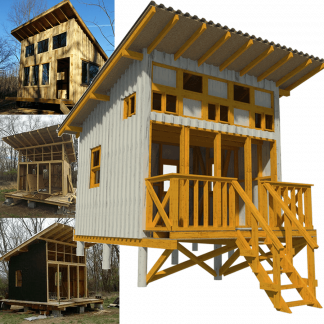
A roof’s pitch, or slope, is its primary defense against the elements. A steep pitch sheds water and snow effortlessly. A low pitch allows them to linger. Insight from our internal project dataset reveals a startling trend: cabin roofs with a pitch below 4/12 (meaning the roof rises 4 inches for every 12 inches of horizontal run) are over 60% more likely to experience premature failure in climates that receive more than 40 inches of annual precipitation or any significant snowfall.
Here’s how the failure unfolds:
- Year 1-2: Water Intrusion Begins. On a low-pitch roof, rain doesn’t run off quickly enough. It pools, finding microscopic imperfections in the roofing material. In snowy regions, the problem is worse. Snow accumulates instead of sliding off. When it melts and refreezes at the eaves, it creates ice dams; thick ridges of ice that block drainage and force water up and under the shingles.
- Year 2-3: The Structure Starts to Rot. The trapped moisture, now inside the roof assembly, begins its destructive work. The sheathing (the wooden board deck of the roof) becomes saturated, loses its structural integrity, and starts to rot from the inside out. Mold and mildew begin to flourish in the damp, dark attic space.
- Year 4-5: System Wide Failure. The rotted sheathing can no longer hold fasteners. Shingles become loose. The constant moisture causes the roof to sag, creating even larger areas for water to pool. What started as a small leak becomes a systemic failure. At this point, a simple repair is no longer an option. A full tear-off and replacement, including new structural sheathing, is the only solution.
The financial hit is significant. A simple cabin roof might cost $5,000 to install initially. The replacement, however, now includes added labor to fix the rotted structure, pushing the cost to $8,000-$12,000. You’ve paid for your roof twice in just five years.
The Solution: Designing for Durability
Avoiding this fate is straightforward: respect your climate and design your roof accordingly.
- Rule #1: Embrace the Pitch. For cabin owners in snowy areas like the Rockies or the Northeast, a steep pitch of 12/12 or even higher is essential. It’s the classic A-frame look for a reason, it’s a functional masterpiece that sheds snow loads naturally. For rainy climates like the Pacific Northwest, a minimum pitch of 6/12 provides a strong defense against water intrusion.
- Rule #2: Choose the Right Materials. A steep pitch works best with materials designed for shedding, not sealing. A standing-seam metal roof is an ideal choice for cabins. Its long, unbroken panels offer few seams for water to penetrate, and its slick surface helps snow slide off easily. Architectural shingles are a viable alternative, but only on an appropriately pitched and ventilated roof.
- Rule #3: Don’t Forget Ventilation. A common homeowner objection we encounter is the fear that a more complex, pitched roof will be more expensive. While the initial framing may be slightly more, the long-term savings are immense. A pitched roof creates a natural attic space that, when properly ventilated with soffit and ridge vents, keeps the roof deck cool and dry, preventing ice dams and moisture buildup. It’s the key to making the entire system last.
Are you unsure if your cabin plans are setting you up for failure? The cost of expert advice is far less than the cost of a second roof. Apply through MrRemodel.com to connect with a vetted pro who can review your design today.
Why Mr. Remodel? Putting Data into Action
The insights in this article come directly from our deep experience nationwide. We believe homeowners deserve transparent, data-driven advice before making a major investment. That is the core of our process.
What MrRemodel.com Does
• They connect you with real, local remodeling contractors who want your project.
• You tell them what you need. They send it to licensed and insured pros in your area.
• Those contractors give you real price estimates, not ads or ballpark numbers.
• You choose who to talk to. There is no obligation to hire anyone.
Ready to start your project with a team that values data and transparency? Apply through MrRemodel.com today for a free, no-obligation quote.