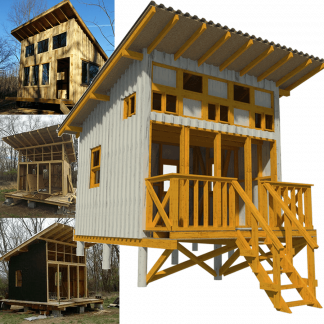


Outdoor lighting matters even more when the home is small. A tiny house, cabin, cottage, or compact home has limited exterior space, so every fixture needs to look intentional. The right outdoor wall light can make a small entrance feel warmer, help guests find the door, improve safety around steps, and add character without making the exterior feel crowded.
The best outdoor wall light ideas for tiny houses are not always about choosing the biggest or brightest fixture. They are about scale, placement, brightness, finish, and how the light supports daily use. A well-chosen wall light should match the architecture, handle outdoor weather, and give enough visibility without creating glare around small porches, decks, patios, and narrow side paths. To help you choose lighting that actually works for a smaller exterior, here are seven outdoor wall light ideas that balance style, safety, scale, and everyday use.
1. Create a Welcoming Entrance With a Matte-Black Wall Lantern
A matte-black wall lantern is one of the easiest ways to make a tiny house entrance feel finished. The black finish creates a clean frame against wood siding, painted panels, stone, brick, or light-colored exterior walls. It also works well with black door handles, window frames, house numbers, railings, and other exterior hardware, which helps the entrance feel more planned.
For a small front door, matte-black outdoor wall light placed beside the entry is usually enough. If the entrance is wider, two matching fixtures can add balance without making the wall feel heavy. Choose a compact or medium-sized lantern with clear or ribbed glass, warm white light, and a weatherproof rating suitable for the location. This gives the doorway enough brightness for keys, deliveries, steps, and evening arrivals while keeping the look simple.

Up-and-down outdoor wall lights are a good fit for tiny houses with modern architecture. These fixtures cast light above and below the fitting, creating a clean vertical effect on the wall. On a compact façade, that light pattern can add depth and shape without needing extra decoration, large trim, or oversized exterior features.
This idea works best on smooth siding, vertical cladding, dark exterior paint, rendered walls, or flat modern surfaces. Place one fixture near the front entry, beside a patio door, or along a narrow side wall where the light can highlight the structure. Avoid using too many up-and-down lights on a tiny home, because repeated light beams can make the façade feel busy. One or two well-positioned fixtures usually look more refined.

3. Choose Solar Wall Lights for Off-Grid Cabins
Solar wall lights are practical for off-grid cabins, garden cabins, sheds, and tiny homes where wiring is limited or expensive. They can add useful brightness near doors, side walls, raised decks, storage areas, and outdoor steps without needing a new electrical circuit. This makes them a smart option for remote locations or weekend cabins that need simple exterior lighting.
Before choosing solar outdoor wall lights, check the sunlight exposure first. A fixture placed under a deep roofline, dense trees, or a shaded wall may not charge properly during the day. Look at battery capacity, lumen output, charging time, weather resistance, and the direction of the solar panel. Solar lighting works best when the fixture gets enough sun and the brightness matches the task, whether that is guiding movement or adding a soft evening glow.

4. Add Rustic Character With an Antique Copper Wall Light
An antique copper wall light suits cabins, cottages, and small homes that use natural materials. Copper pairs beautifully with timber cladding, cedar siding, stone walls, warm brick, dark trim, and earthy paint colors. It has a softer feel than black or chrome, which makes it useful when the goal is to create a warm and lived-in exterior.
This style works especially well beside a cabin door, porch corner, garden-facing wall, or covered entry. An antique copper wall light can make the fixture feel like part of the home’s character rather than a random add-on. For the best result, keep the surrounding design simple and let the finish do the work. . Use warm bulbs so the light supports the rustic look instead of feeling too cold or sharp.

5. Install Motion-Sensor Lights Near Side Entrances
Side entrances, back doors, and narrow outdoor paths are often the darkest areas around tiny houses and cabins. These spaces may be used for bins, storage, firewood, tools, pets, or late-night access, but they are easy to forget during the lighting plan. A motion-sensor outdoor wall light solves this problem by turning on when movement is detected.
This type of light is useful because it gives brightness only when needed. It can help with late arrivals, package deliveries, quick outdoor tasks, driveway access, and safer movement around uneven ground. For small homes, choose a motion-sensor wall light that still looks like a proper exterior fixture. A clean lantern, modern sconce, or compact sensor light will feel more attractive than a bulky security floodlight.

6. Add Recessed Wall Lights Along Steps and Raised Decks
Tiny homes and cabins often have raised decks, compact stairways, small platforms, or narrow entry steps. These areas need careful lighting because people move through them often, and one missed step can be a real safety issue. Recessed wall lights are useful because they guide movement without taking up space or drawing too much attention.
Install recessed lights along deck walls, stair edges, low retaining walls, or raised walkways where people need clear footing after dark. The goal is not to flood the area with brightness, but to create soft direction and safe movement. Low-glare lighting works best in tight spaces because it protects visibility without shining directly into someone’s eyes. This keeps the deck practical while preserving a calm outdoor atmosphere.

7. Use Dimmable Wall Sconces Around a Compact Patio
A compact patio should feel comfortable, not overlit. Dimmable outdoor wall sconces give you better control because the same small space may be used for different activities. You may need brighter light while eating, cleaning, or moving furniture, then softer lighting later when sitting outside, reading, or relaxing.
Place dimmable wall sconces beside a patio door, near outdoor seating, or along a covered wall where the light can spread gently. Warm white bulbs usually work best because they make small patios feel cozy and natural. Avoid fixtures that are too large or too bright for the area. In compact outdoor spaces, controlled light often feels more premium than one strong fixture trying to do everything.

Conclusion
Outdoor wall lights can make tiny houses, cabins, and small homes feel safer, warmer, and more thoughtfully designed. The best fixture depends on the size of the exterior, the material of the wall, the amount of brightness needed, and how the space is used after dark. A small home does not need many lights, but it does need the right ones in the right places.
Use a matte-black wall lantern for a clear and welcoming entrance, antique copper lighting for rustic character, solar wall lights for off-grid cabins, and motion-sensor fixtures for darker access points. For steps, decks, and patios, choose lighting that improves safety and comfort without overpowering the space. Once the placement is clear, choose a weather-ready outdoor wall light that matches your home’s scale and supports everyday outdoor living.