Small homes are designed to make every square foot matter. A compact kitchen, a smart bathroom layout, and efficient storage can make a tiny house, cabin, or backyard studio feel surprisingly comfortable. But when something goes wrong with the plumbing, the same small footprint can make the problem harder to ignore.
Small-space plumbing has less room for error. Pipes may run behind built-in furniture, under narrow cabinets, through insulated walls, or close to structural framing. A small leak, slow drain, or pressure issue can quickly affect finished surfaces, storage areas, flooring, and the everyday comfort of the home.
Whether someone is searching for a plumber in Toronto or looking for a trusted professional closer to their own build site, the reason is usually the same: they want to understand the problem before a minor warning sign turns into a repair that is harder to reach, diagnose, or fix.
Why Plumbing Problems Feel Bigger in Small Homes
Plumbing problems can happen in any home, but compact homes give them less space to hide. In a standard house, a slow drain or tiny leak might stay limited to one bathroom for a while. In a tiny home or cabin, the sink, shower, toilet, water heater, and storage areas may all sit close together.
That means one issue can affect several parts of the home at once. Moisture under a sink may spread into a cabinet. A poorly sloped drain can create repeated odors. A water heater leak can damage nearby flooring or wall finishes. Even a running toilet can become more noticeable when the bathroom is only a few steps from the sleeping area.
Small homes also tend to use compact fixtures, tight pipe runs, and creative layouts. These choices can work very well, but only when the plumbing is planned with access, drainage, ventilation, shutoff valves, and long-term maintenance in mind.
Early Warning Signs You Should Not Ignore
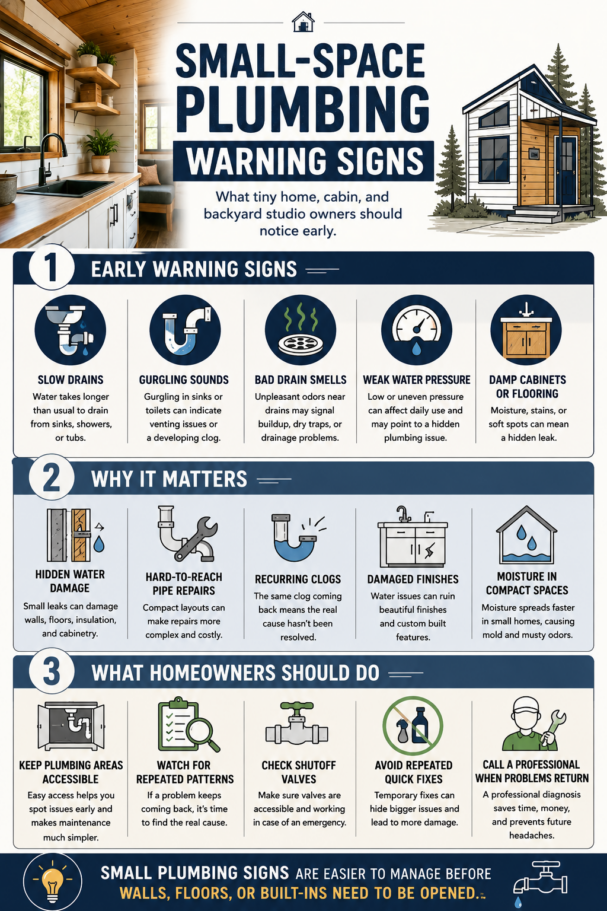
Some plumbing issues begin quietly. They may not look urgent at first, but they can reveal that something deeper is happening inside the system.
Slow Drain
A slow drain is one of the most common early warning signs. If one sink or shower drains slowly, the issue may be local buildup near that fixture. Hair, soap residue, food particles, grease, or mineral deposits can narrow the drain opening over time.
However, if several drains slow down at once, the problem may be deeper in the drainage system. In a compact home, this can sometimes happen when fixtures are grouped closely together and share short drain runs. Repeated slow drainage is a sign to stop relying on quick fixes and look for the cause.
Gurgling Sounds
Gurgling sounds often mean air is struggling to move properly through the drain system. You might hear it after flushing a toilet, emptying a sink, or running a shower. In small-space plumbing, this can point to venting issues, partial clogs, or poor drainage design.
A single gurgle does not always mean there is a major problem. But if it keeps happening, especially with slow drains or odors, it should be taken seriously.
Bad Smells Near Drains
Unpleasant drain odors can come from several causes. A dry trap, trapped organic buildup, poor ventilation, or drainage problems can all allow smells to enter the living space. This is especially disruptive in tiny homes and cabins because the kitchen, bathroom, and sleeping area are often close together.
If adding water to a rarely used drain does not solve the smell, or if the odor comes back quickly, the issue may need a closer look.
Low or Uneven Water Pressure
Water pressure issues can be frustrating in a compact home because they affect daily routines right away. A weak shower, slow-filling sink, or pressure drop when two fixtures run together may point to a supply problem.
The cause could be simple, such as a clogged aerator. It could also involve a partially closed shutoff valve, undersized supply lines, buildup in the pipes, a pump issue, or a hidden leak. If the pressure changes suddenly, it is worth checking early.
Moisture, Stains, or Soft Spots
Visible moisture is never something to dismiss. Look under sinks, around toilets, near the water heater, behind access panels, and around exterior plumbing connections. Water stains, swelling, soft flooring, musty smells, or damp storage items may point to a hidden leak.
In small homes, moisture can damage more than the plumbing area. It can affect insulation, cabinetry, wall panels, and finishes that are difficult to remove neatly.
Why Quick Fixes Do Not Always Solve the Problem
A quick fix can be useful for a minor issue, but repeated quick fixes often hide the real problem. If the same drain keeps clogging, the issue may not be the visible drain opening. It may be buildup farther down the line, a venting issue, poor slope, or a problem with how fixtures connect.
The same is true for leaks. Tightening a fitting or wiping away water may help for a moment, but recurring moisture means the source has not been corrected.
Before repeating the same temporary solution, ask:
- Does the problem come back within days or weeks?
- Are several fixtures affected?
- Is there gurgling, odor, or backup?
- Is water appearing where it should not?
- Did the issue start after cold weather, heavy use, or recent renovation work?
If the answer is yes, the plumbing system may need a full plumbing inspection rather than another surface-level repair.
Small-Space Plumbing Areas That Need Extra Planning
A compact layout can save space, but it should still allow the plumbing system to function and be serviced.
Under-Sink Areas
Under-sink spaces are often used for storage, but they also contain important plumbing connections. Avoid packing the area so tightly that leaks stay hidden. Leave enough room to see the trap, supply lines, and shutoff valve.
A small drip under a sink can damage cabinetry before the homeowner notices it. Keeping this area visible makes plumbing maintenance much easier.
Water Heater Placement
Tiny homes and cabins often use compact or on-demand water heaters. These can be practical, but placement matters. The unit should be accessible for inspection, service, and safe operation.
If you notice inconsistent hot water, moisture near the unit, or signs of a water heater leak, act quickly. Hot water equipment should not be boxed in so tightly that maintenance becomes difficult.
Drain Runs and Slope
Drainage depends on proper slope and airflow. If drains are too flat, poorly routed, or difficult to vent, wastewater may move slowly or leave residue behind. Over time, that can lead to recurring clogs, odors, and backups.
Good planning is especially important when a shower, toilet, and sink are grouped close together. The design should support both daily function and future drain cleaning if needed.
Cold-Weather Protection
Cabins, backyard studios, and mobile tiny homes may be exposed to colder conditions than standard homes. Plumbing that runs through exterior walls, under floors, or through unheated areas needs protection.
Pipe insulation, interior routing, proper shutoff access, and seasonal drain-down planning can reduce the risk of freezing. In regions with harsh winters, cold-weather planning should happen before the walls and floors are finished.
When Professional Help Makes Sense?
Some checks are simple. You can look for visible leaks, clean an aerator, check whether the shutoff valve is fully open, and notice whether one fixture or several fixtures are affected. But some plumbing problems need professional diagnosis because the cause is not visible from the surface.
Professional help makes sense when:
- Several drains are slow at the same time
- A clog keeps coming back
- There are sewer-like smells
- Water pressure drops suddenly
- You find stains, dampness, or soft flooring
- A toilet keeps running after basic adjustment
- You suspect a hidden leak
- A pipe repair would require opening walls, floors, or built-in furniture
Local experience also matters because plumbing needs vary by climate, building type, and local code expectations. For example, Toronto homes can include older supply lines, basement moisture concerns, compact renovation layouts, and cold-weather pipe risks. Local specialists like Cheap Plumber focus on practical diagnosis, clear explanations, and plumbing solutions that help homeowners address issues before they become more disruptive.
What Quality Plumbing Support Should Include
A good plumbing visit should not feel rushed or unclear. The goal is not only to stop the symptom, but to understand why it happened.
Quality plumbing support should include:
- Clear diagnosis: The professional should explain what they found and why it matters.
- Practical options: Not every issue needs the most complex repair. Good advice should separate urgent work from future improvements.
- Access planning: In small homes, access matters. Repairs should consider how pipes can be reached later.
- Prevention guidance: The homeowner should know what to watch for after the repair.
- Respect for finished spaces: Small homes often have custom cabinets, compact bathrooms, and carefully planned interiors. Work should be done with that in mind.
Simple Checks Before You Call a Plumber
Before calling for help, homeowners can gather useful information. This makes the conversation clearer and may help the professional identify the likely issue faster.
Check:
- Which fixture is affected
- Whether hot and cold water are both affected
- Whether the issue happens all the time or only during heavy use
- Whether there are odors, sounds, or backups
- Whether any nearby cabinet or floor area feels damp
- Whether the shutoff valve is accessible and fully open
- Whether the problem started after freezing weather, renovation work, or a period of non-use
Do not open walls, remove major fixtures, or use harsh chemicals repeatedly. If the problem keeps returning, it is safer to investigate the cause.
Final Thoughts
Small-space plumbing should be planned and maintained with care because compact homes leave very little room for hidden problems. A slow drain, hidden leak, pressure drop, running toilet, or unusual smell may seem minor at first, but in a tiny home, cabin, or backyard studio, these signs can affect comfort and finishes quickly.
The best approach is simple: notice patterns early, keep plumbing areas accessible, avoid repeated quick fixes, and call a qualified professional when symptoms return or affect more than one fixture. A well-planned plumbing system helps a small home feel comfortable, practical, and easier to maintain for years.