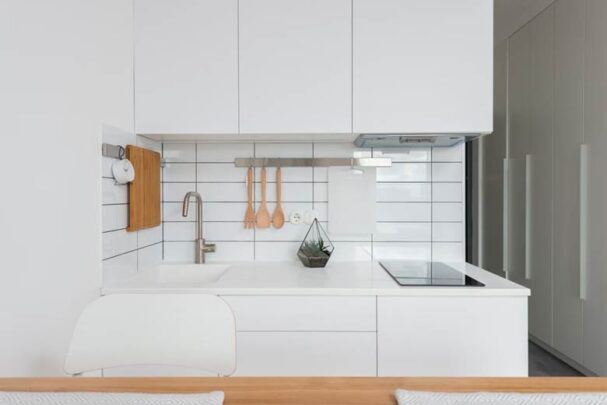
On paper, remodeling a tiny kitchen may seem simpler than renovating a full-sized one. In practice, working with limited space requires more careful planning, as there is little room for impractical design choices.
For homeowners planning to renovate their tiny kitchen, choosing the right material for the countertop is a good starting point. In this article, we’ll explore the best countertop materials for small kitchens and break down what to consider before choosing one for your remodel.
Why Small Kitchens Need Low-Maintenance Countertop Materials
Small kitchens are no longer limited to apartments and starter homes. They are now a deliberate choice for people building tiny houses, adding backyard cottages, or simply trying to use space more efficiently.
In these kitchens, the countertop often handles more daily activity than its size suggests, so choosing a material that is easy to care for can make a noticeable difference.
When countertop space is limited, the same area gets used repeatedly throughout the day. As a result, homeowners find ways to add counter space in a tiny kitchen. It might hold a coffee maker in the morning, serve as a prep surface at dinner, and double as a place to eat. Because of that, a material that stains, scratches, or needs frequent maintenance may not be the most practical choice.
This is why choosing durable countertops for off-grid kitchens or other compact homes takes more than comparing colors and finishes. The best countertop is one that can keep up with everyday use without demanding constant attention.
The Best Countertop Materials for Small Kitchens
With so many countertop options on the market, choosing one for a small kitchen can quickly become overwhelming. Quartz and porcelain countertops are often among the first choices homeowners consider, but they are not the only materials that can work well in a compact space. Here are some practical materials worth considering for your space.
Quartz
One reason quartz remains popular in compact kitchens is that it is easy to maintain. Because it is non-porous, it does not need regular sealing and can usually be cleaned with mild soap and water. Quartz kitchen countertops also come in a wide range of colors and patterns, which makes it easier to find a design that suits a compact space without making it feel too busy.
However, it’s important to note that quartz countertops are not heatproof. Placing hot pans directly on the surface can damage the resin that binds the material, so trivets should always be used.
Porcelain
Porcelain is a strong choice for small kitchens that see plenty of heat and moisture. The surface absorbs very little water, does not need routine sealing, and can handle most everyday spills without holding on to stains. Its slim profile can also give a compact kitchen a lighter, more streamlined appearance.
Porcelain is durable, but it still has a few weak points. The edges can chip if they take a hard hit, and cuts around sinks or cooktops need to be measured carefully. Taking accurate measurements and working with an experienced fabricator can help prevent costly issues.
Solid Surface
For a tiny kitchen with an unusual layout, solid surface offers more flexibility than many slab materials. It can be cut and joined to create long, smooth runs with fewer visible breaks. That gives the countertop a cleaner appearance while making it easier to wipe around sinks and corners.
Solid surface is also relatively easy to restore when everyday wear begins to show. Small scratches can often be repaired without removing the entire countertop. However, it can still be marked under sharp objects and direct heat.
Stainless Steel
For homeowners who cook regularly, stainless steel can be a practical countertop choice. Hot pans are less of a concern, and spills do not soak into the surface. A sink and backsplash can also be formed into the counter, making the area around them easier to clean.
The surface will naturally develop scratches and fingerprints with regular use. If the steel is too thin or poorly supported, it may also dent or produce a hollow sound.
Compact Laminate
Compact laminate works well when a kitchen needs a thin countertop without the weight of a full stone slab. Its solid core allows the edge to remain visible, giving the counter a cleaner profile that does not overwhelm a small room. It also requires no sealing and is easy to wipe down after daily use.
It is practical for routine cooking, but it needs protection from hot cookware and sharp knives. The material cannot usually be sanded back or repaired once it is deeply damaged.
How to Choose the Right Tiny Home Kitchen Countertops
Choosing a countertop for a tiny home takes more thought than simply picking a surface that looks good. The material needs to work with the home structure and the way the kitchen is used each day. Like other practical tiny-house interior ideas, the best choice should make the space easier to live in without creating extra maintenance.
Here are some helpful criteria to consider when comparing countertop materials:
- Consider the Weight of the Material: Weight matters in any tiny home, especially one built on a trailer. A heavy countertop may require stronger cabinets or additional floor support. Before choosing a slab, consider how it will affect the home’s overall weight and whether the structure can support it safely.
- Think About Your Cooking Habits: The way you use the kitchen should influence the material you choose. Frequent cooking may call for better heat and stain resistance, while a lightly used kitchen may give you more flexibility. Consider whether hot pans, sharp tools, or countertop appliances will regularly come into contact with the surface.
- Look at the Maintenance Requirements: Some countertops need periodic sealing or refinishing, while others require little more than routine cleaning. Choose a material with care requirements that fit your schedule. In an off-grid or remote home, it may also be helpful to avoid surfaces that depend on specialty cleaners or frequent professional service.
- Check How Easily It Can Be Repaired: Even durable countertops can become scratched, chipped, or stained. Find out whether minor damage can be repaired in place or whether it would require replacing a larger section. Repairability is especially important when the home is far from experienced fabricators.
Final Takeaways
A countertop may seem like one detail in a kitchen remodel, but in a compact space, it can shape how easy the room is to use every day. The material should feel at home in the layout and hold up without demanding constant attention.