
A backyard pool taking shape alongside a DIY cabin build
If you’ve already poured a slab for a shed, framed out a cabin, or built your own deck, you know the satisfaction of watching a backyard project come together piece by piece. A pool is often the next item on that list, and it’s usually the biggest one. Unlike a shed or a deck, a pool touches excavation, plumbing, electrical, and permitting all at once, and the price tag reflects that complexity.
Treating a pool like just another line item in your build budget is a mistake. It deserves the same planning rigor you gave your cabin or ADU, plus a financing strategy that fits how you build: in phases, on your own timeline, often with cash flow that ebbs and flows between projects.
Financing Options for Your Backyard Pool Project

Most DIY builders fund their projects with a mix of savings and small loans, but a pool’s price tag usually pushes past what cash alone can comfortably cover. You’ve got a handful of realistic routes: home equity loans or HELOCs, personal loans, contractor-arranged financing, cash-out refinancing, and dedicated pool loans.
That last option is worth a closer look if you’d rather not touch your home’s equity. A dedicated pool loan is typically unsecured, which means no lien against your house, and funds arrive as a lump sum you can use however the project demands, whether that’s paying the excavation crew upfront or covering equipment costs as they come due. Rates for pool loans in 2026 generally run 8% to 20% APR depending on your credit profile and the lender, while general-purpose personal loans span a wider 6% to 36% range, with the best pricing reserved for borrowers with credit scores above 690, according to HFS Financial’s 2026 rate data.
Contractor financing can be convenient since it’s arranged at the point of sale, but read the fine print closely. Some of these plans carry promotional rates that jump sharply after an introductory period.
What a Pool Really Costs in 2026
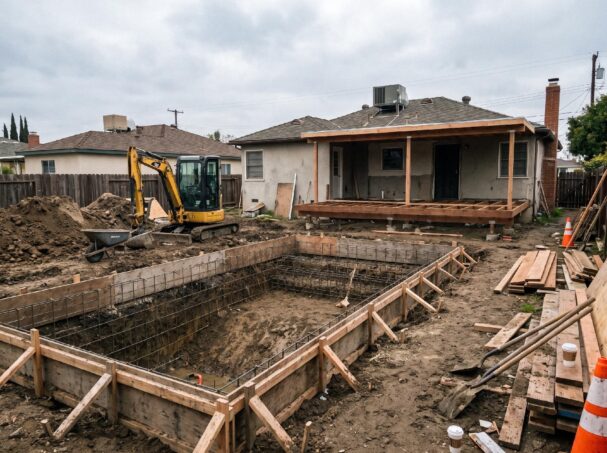
The average in-ground pool now costs around $62,500 to install, with most projects landing somewhere between $25,000 and $100,000 depending on size, material, and site conditions, according to Pool Estimate’s 2025-2026 pricing data. Concrete pools sit at the higher end. A gunite shell alone can run $50,000 to $120,000 or more in 2026, and that’s before you factor in the $8,000 to $10,000 resurfacing job most concrete pools need every 10 to 15 years, plus $300 to $1,000 acid-wash treatments every 3 to 5 years, according to FindMyPoolBuilder’s 2026 pricing guide.
Vinyl and fiberglass pools tend to run cheaper upfront but carry their own tradeoffs in longevity and repair costs. And prices aren’t holding steady. In-ground pool prices have climbed 20% to 35% since 2020, and even above-ground pools cost roughly 30% more than they did in 2019, driven largely by material and freight costs, per Pool Estimate. If you built your shed or cabin a few years ago, don’t assume pool costs will feel comparable. They won’t.
Weighing Collateral Risk: Secured vs. Unsecured Options
Before you sign anything, understand what you’re putting on the line. A home equity loan or HELOC uses your house as collateral, and borrowing typically caps at 80% to 90% of your home’s value minus what you still owe on the mortgage, with repayment terms stretching up to 30 years, according to a home-equity financing overview from The Mortgage Reports. That long runway can mean lower monthly payments, but it also means a missed payment puts your home at risk, not just your credit score.
The Consumer Financial Protection Bureau breaks this down clearly in its explainer on home equity loans, which is worth reading before you commit to any product that uses your house as security. The CFPB’s HELOC consumer brochure also walks through variable-rate risk and draw-period mechanics in plain language, details that get glossed over in a lot of lender marketing.
Unsecured personal and pool loans skip the collateral risk entirely. You’ll usually pay a higher rate for that protection, but if you’re already carrying a mortgage and maybe a construction loan on an ADU or cabin, adding another lien to the pile isn’t always the smart move. It comes down to how much risk you’re willing to stack on your primary residence.
Budgeting Like a DIY Builder
If you’ve budgeted for an ADU or a self-built tiny home before, you already know the drill: the sticker price is never the final number. Our budgeting for an ADU piece covers hidden costs that catch first-time builders off guard, and most of that logic carries straight over to a pool build. Permitting fees, utility hookups, fencing required by local code, and site prep for tricky terrain can all add thousands beyond the base quote.
Build in a buffer of 10% to 15% on top of your contractor’s estimate, and don’t forget ongoing costs once the pool is finished. Monthly maintenance, including chemicals, electricity for pumps, and routine service, typically runs $80 to $150. That’s a real number to plug into your monthly budget, not an afterthought.
If a pool is one piece of a bigger backyard vision that also includes a deck, patio, or outdoor kitchen, treat the whole thing as a single phased budget rather than separate projects competing for the same funds. Our guide on smart financing options for a self-built home walks through how to sequence financing across multiple build phases without overextending yourself.
Choosing the Right Loan for Your Timeline and Credit
Lenders generally want to see a credit score of at least 600 to 650 to qualify for pool financing at all, but the best rates are reserved for borrowers at 720 and above. Debt-to-income ratio matters too. Most lenders want your total monthly debt payments, including the new pool loan, to stay under 40% to 45% of your gross income.
Match the loan structure to how you’re actually building. If your contractor needs a lump sum to break ground, a personal or pool loan that disburses all at once makes sense. If you’re managing the project in phases the way you might have with a shed or ADU, a HELOC’s draw structure can work better, letting you pull funds as each phase starts rather than paying interest on money sitting idle.
None of this needs to be complicated, but rushing the comparison is how people end up with a rate that costs them thousands over the life of the loan.
Wrapping Up the Backyard Vision
A pool is a bigger financial swing than most backyard projects, but it doesn’t have to break the discipline you’ve already built. Treat it the same way you treated your cabin, shed, or ADU: get a real cost estimate, pad the budget, compare loan types against your actual risk tolerance, and match the financing structure to your build timeline.
Homeowners who’ve already gone through the process of financing a self-build tend to do this instinctively. If you’re new to it, the CFPB’s consumer guidance and a few honest quotes from local pool contractors will tell you more than any single blog post, including this one. Get those numbers first, then decide how to pay for them.