When building a log cabin, especially in a colder country, keeping it warm without spending a ton of money can be a bit of a challenge. However, there are a few things to consider and remember that will not only make it easier, but also budget-friendly.
Analyze Cabin Use
The first thing you need to do is simply decide what the cabin is for. Are you going to live there permanently, is it for weekends away, or is it a Winter retreat? While this may seem like a simple question, it can, and often does, decide the type of heating you need or want.
For instance, a couple of electric heaters can do the job for a night or two, but a combination of solar heating and a wood stove is often better for more long-term stays.
Cabin Size
Another consideration is the size of your cabin. Once again, a smaller cabin can usually be heated just fine with a heater or two or a wood stove, but a larger cabin may need underfloor heating, a heat pump, etc.
Types of Heating
While there are various forms of heating you can use, they can all broadly be categorized into three sections: heaters, stoves, and heat pumps.
Heaters
Heaters can range from electric and gas space heaters, to underfloor heating, and everything in between. Regular gas and electric heaters are typically cost-effective choices, but can struggle in very cold temperatures, and aren’t as efficient in larger spaces.
Wood Stove
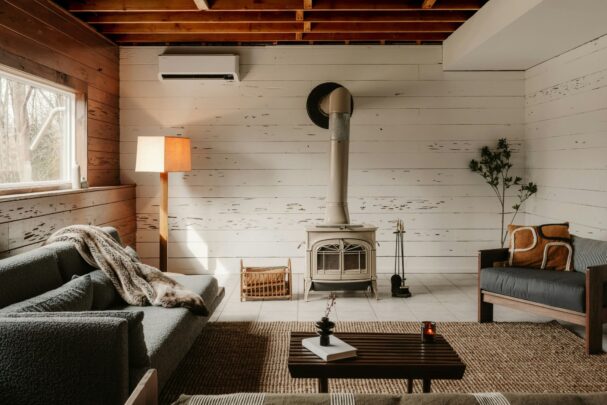
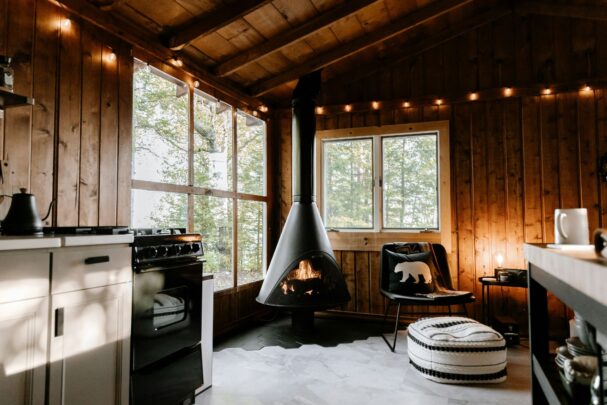
Wood stoves are a common heating choice for cabins. They are exceptionally efficient at creating heat, and work at their best when your cabin is properly insulated. Additionally, they add a charm and coziness to your cabin that other options simply don’t have.
Heat Pump
Finally, a heat pump is one of the more expensive forms of heating, but they are incredible at providing long-lasting heat to your cabin. They can also be combined with underfloor heating, creating a more holistic heating system.
Insulation
Insulation should be the number one priority when it comes to heating. There is no home heating system that can fight against a poorly insulated home, and you will end up spending far more money than you think on gas, electricity, or wood.
While wall insulation is often focused on, you can’t overlook your floor, especially if you have a raised cabin. While you can enclose the underside of your cabin, it is still important to insulate your floor.
Focus on Your Roof/Ceiling
Your roof is another area that needs investment in insulation. Hot air moves up, and if your roof isn’t insulated correctly, the heat will simply disappear. The goal is to catch the rising hot air, and circulate it, much like an oven.
Building your cabin, placing the insulation on the outside, underneath your shingles, will ensure your home stays warm during the Winter, but also ensures it doesn’t become an oven in the Summer.
Double Glazing
Until you live without it during the Winter, you may not know just how important double glazing is when it comes to keeping your home warm. Single glazing is not only terrible at retaining heat, but it can also pull cold air into your home.
On the other hand, double glazing is excellent at radiating heat and pushing it back into your cabin. While it can be expensive, the cost is quickly paid off by the amount of money you will save on heating.
Seal All Gaps
This step is more of something that needs to be done throughout the building process, and then when you have moved in or stayed in the cabin for a few days. Checking for gaps is a crucial step when it comes to your heating needs.
Whether it is between the cabin walls, on the edges of your doors or windows, or even a small space between your chimney and stove, these gaps can quickly drain your heating, and allow cold air to easily enter. Therefore, also do checks and tests to ensure there aren’t any gaps, and if you find any, seal them immediately.
Carpets/Carpeting
Finally, never underestimate the power of carpets and carpeting. We lose plenty of heat through our feet, and having carpeted floors can not only give you the illusion of warmth, but also provide actual warmth as well.
While there is not often a need to carpet your entire cabin, having a few floor rugs in busy areas will often be more than enough to give you the warmth and comfort you need.
Ask an Expert
Finally, if all of this sounds like a bit too much, or you’re nervous that you may forget something, it is always best to consult an expert. Not only will they help you find the best solutions, but they also have the knowledge to find weak points that you may overlook.
Additionally, they can help you find the most cost-effective ways of keeping your cabin warm, especially if you are on a budget. Whether you are maintaining a property or reviewing a Black Hills cabin guide, even a simple, once-off consultation can give you valuable insight.