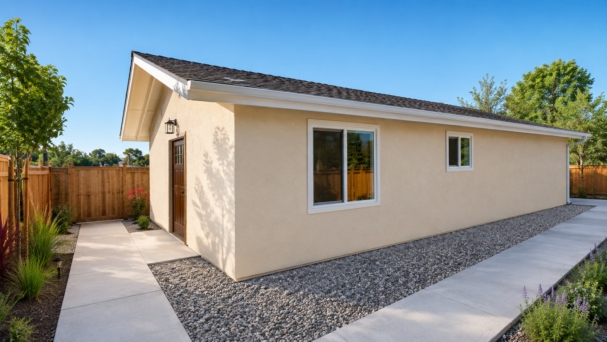
Tiny homes, casitas, and ADUs are getting a lot of attention in Arizona. Homeowners want more space, more flexibility, and in some cases, extra rental income. A small backyard home can help with all of that, but the words can get confusing fast.
One person may call it a tiny home. Another may call it a casita. A city planner may call it an ADU. A real estate agent may call it a guest house or in-law suite.
Those words are not always the same.
Before buying plans, ordering a prefab unit, or starting construction, Arizona homeowners should understand the difference between a style, a common name, and a legal housing category. That difference can affect permits, rental use, utilities, cost, and the long-term value of the project.
The Simple Difference Between a Tiny Home, Casita, and ADU
The easiest way to understand the topic is this:
A tiny home is usually about size and style.
A casita is usually a common local name.
An ADU is usually a legal dwelling category.
Those three ideas can overlap, but they are not the same.
What Is a Tiny Home?
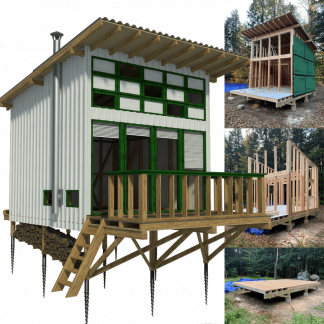
A tiny home is a small house. It may be built on a foundation, built in a factory, or placed on wheels. Many tiny homes are designed to save space with compact kitchens, small bathrooms, loft beds, built-in storage, and open living areas.
The problem is that “tiny home” is not always the legal category a city uses.
In Arizona, a tiny home still has to fit local building and zoning rules. If it will be used as a living space, it may need to meet standards for safety, plumbing, electrical work, heating and cooling, sanitation, access, and utility connections.
A tiny home on wheels can be even more complicated. Some cities may not treat it the same as a permanent dwelling. That does not mean it can never work, but it does mean the homeowner should check local rules before buying one.
A tiny home can be a great idea, but the permit path should come before the purchase.
What Is a Casita?
A casita is a familiar word in Arizona. In many neighborhoods, it means a small guest house, backyard suite, or private space near the main home.
A casita might be used for visiting family, a home office, a pool house, an art studio, or a private room for an adult child.
But “casita” is often a casual word. The city may not use it the same way the homeowner does.
In some places, a casita may be treated as a guest house. In others, if it has its own kitchen, bathroom, and living area, it may be treated more like an ADU. The legal use matters more than the nickname.
That is why two casitas can look similar but be treated differently. One may be approved for guests only. Another may be approved as a separate living unit.
What Is an ADU?
An ADU, or accessory dwelling unit, is a smaller living unit on the same property as a main home. It is often used as a backyard home, garage conversion, in-law suite, or attached apartment.
Arizona law describes an ADU as a self-contained living unit on the same lot as a larger single-family home. It includes its own sleeping and sanitation facilities, and it may include its own kitchen facilities.
That makes an ADU different from a simple guest room or backyard office. An ADU is meant to function more like its own home.
For many homeowners, the ADU path makes the most sense when the space needs to support independent living or rental use.
Choose Based on How You Want to Use the Space
The best choice depends on the goal. A homeowner who wants a guest bedroom does not need the same project as a homeowner who wants rental income.
If You Want Space for Guests
A casita or guest house may be the right fit.
This can work well for family visits, friends from out of town, or seasonal guests. The space can feel private while still being part of the main home.
In many Arizona homes, especially in areas like Scottsdale, Paradise Valley, and North Phoenix, casitas are popular because they match the way people live. They give guests privacy without changing the whole house.
The key question is whether the space will be rented separately. If the answer is no, a guest-style casita may be enough.
If You Want Rental Income
An ADU is usually the better path.
A guest house may not be allowed to rent separately, depending on the city. Scottsdale is a good example. The city states that a guest house is not an ADU and may not be rented separately from the main residence.
That is a big difference.
If the goal is long-term rental income, an ADU may give the homeowner a cleaner legal path. The unit can be designed with the right kitchen, bathroom, entrance, privacy, and utility setup from the start.
Short-term rentals are another matter. Cities may have special rules, licenses, taxes, and limits. Homeowners should check local rules before planning any Airbnb-style use.
If You Want a Home Office or Studio
A full ADU may be more than you need.
If the space is only for work, exercise, hobbies, or storage, a smaller accessory structure may be simpler and less expensive. A full kitchen and bathroom can add a lot of cost.
A backyard office can still be very useful. It can create separation from the main house, help with focus, and add flexible space. But it should be planned around its real use.
If You Want Space for an Aging Parent or Adult Child
An ADU or casita can both work, but the details matter.
If the person needs daily independence, an ADU may be better. It can include a kitchen, bathroom, private entrance, and a comfortable living area.
If the space is for visits or part-time use, a casita may be enough.
For aging parents, design matters. A smart layout may include fewer steps, wider doors, strong lighting, a walk-in shower, and an easy path to the main home.
Permits and Local Rules Matter
Small does not mean simple.
A tiny home, casita, or ADU may be smaller than a regular house, but it can still need permits, inspections, and city approval.
Local rules may control:
- Where the unit can be built
- How large it can be
- Whether it can have a kitchen
- Whether it can be rented
- How utilities must be connected
- How close it can be to property lines
- Whether parking is needed
- Whether the HOA must approve the design
Arizona has statewide ADU rules, but cities still have local standards. That is why homeowners should check the city where the home is located.
Scottsdale is a useful example. The city has separate information for ADUs and guest houses. It also makes a clear difference between an ADU and a guest house. A guest house is not treated as a dwelling unit or ADU, and it may not be rented separately from the main home.
That kind of rule can change the whole project.
The lesson for homeowners is simple. Do not start with the name. Start with the allowed use.
Ask, “Can this unit legally do what I want it to do?”
Cost and Site Planning
A backyard unit is not just the cost of the structure.
Even a small home may need design work, permits, site prep, foundation work, framing, roofing, windows, insulation, plumbing, electrical, heating and cooling, sewer, water, and finish materials.
A prefab unit may lower some parts of the build, but it does not remove the need for a legal site plan, utility connections, and code review.
A garage conversion may seem easier because the structure already exists. That can help, but the garage may still need insulation, new windows, plumbing, electrical upgrades, drywall, flooring, ventilation, and fire safety work.
A detached ADU may cost more because it is closer to building a small house from scratch. It needs its own structure, roof, foundation, exterior walls, and full living systems.
Site planning is just as important as the floor plan. The best design depends on the property.
Homeowners should look at access, driveway location, utility distance, drainage, privacy, existing walls, pools, trees, slope, and space between buildings. A plan that works on one lot may not work on the next lot.
This is why early planning saves money. It is much better to find issues before construction begins than after plans are drawn or materials are ordered.
Common Mistakes Homeowners Should Avoid
Buying a Tiny Home Before Checking Local Rules
A tiny home may look ready to use, but that does not mean it is allowed as a backyard dwelling. Always check the permit path before buying.
Assuming a Casita Can Be Rented
A casita may be allowed for guests but not for separate rental use. If income is the goal, check whether the project needs to be an ADU.
Ignoring Utilities
Water, sewer, electric, gas, and HVAC can change the cost. The smaller the unit, the more these fixed costs matter.
Skipping Permit Review
Unpermitted work can cause problems with safety, resale, insurance, and future remodeling. A legal project is easier to explain to buyers, lenders, tenants, and appraisers.
Final Thoughts
Tiny homes, casitas, and ADUs can all be smart ways to add useful space. The right choice depends on the property, the budget, and how the homeowner wants to use the unit.
A tiny home is usually about size and style. A casita is usually a local name for a small guest space. An ADU is the legal path when the space needs to work more like its own home.
Before buying plans, ordering a prefab unit, or starting construction, homeowners should confirm what the city allows. That one step can prevent costly changes later.
For Arizona homeowners planning a casita, garage conversion, home addition, or ADU, Infinity Builders helps homeowners think through the design, permit path, and construction process before the project begins.
A small home can be a great addition to the property. The best results come from clear planning, honest budgeting, and the right permit path from the start.