A builder’s take on why certified composite installs earn their keep between dry Bay Area summers and damp winter stretches.

I have pulled apart enough failing decks in Santa Clara County to know where the trouble usually starts. It is rarely the boards. It is the framing, the fasteners, and the way the whole thing was tied to the house. Composite decking gets talked about like a cure-all. It is not. Built correctly, though, it solves most of the headaches that send homeowners back to the drawing board every few years.
The climate here is sneakier than it looks
San Jose sits in a Mediterranean climate. Long dry summers, mild wet winters, and steady UV the whole year. That mix is rough on wood in a very specific way. Boards bake and dry out from June through October, then soak up moisture once the winter rains arrive. Redwood and cedar cope for a while, but the cycle of swelling and shrinking loosens fasteners and opens up checks and splits. Homeowners in Los Gatos or Saratoga with a deck under oak canopy also fight leaf litter and shade that keeps sections damp long after the rest of the yard dries. That is where rot and mildew take hold.
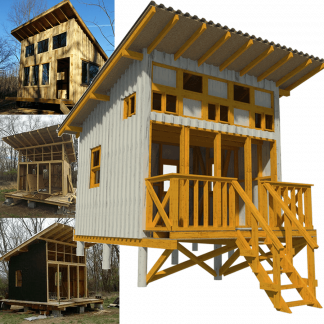
Composite boards do not drink water the way timber does. The better ones use a capped polymer shell over a wood-plastic core, so the surface sheds moisture and resists UV fading. You still get some expansion and contraction with temperature, which is why gapping and fastener choice matter, but you skip the yearly splitting and graying that wood owners live with. The same material trade-offs apply when choosing decking, cladding, or trim for outdoor storage builds, utility spaces, and garden studios—like the structural timber layouts found in Pinup Houses shed plans—where selecting rot-resistant materials and setting up proper ground drainage extends the life of exterior surfaces for decades.
Certification is a method, not a sticker
Manufacturer training changes how a crew builds. When you hire a deck builder in San Jose who carries TrexPro and TimberTech PRO certification, you are hiring someone trained on the exact fastening systems, joist spacing, and gapping tolerances those product lines require to hold their warranties.
That last part gets skipped constantly. A composite board run on 24-inch joist spacing when the spec calls for 16 inches on center, or wider still on a stair or a diagonal, will bounce and telegraph every low spot. The material did nothing wrong. The build did. CSLB license #1142220 sits behind our decks, which means the framing under those boards gets permitted and inspected the way structural work should be. A deck is a structure. Ledger flashing, joist hangers, and footings are what keep it attached to your house through a wet January.
What a lasting deck needs underneath
The parts you never see decide how long the parts you do see will last. Pressure-treated framing, a properly flashed ledger that sends water away from the house band, hidden fasteners rated for the board system, and footings sized for our soils. Much of the flatter valley floor around Santa Clara and Sunnyvale has expansive clay that moves with the seasons. Footings that ignore that will heave, and no board made stays flat over a frame that is on the move.
Airflow matters too. A composite deck built low to the ground with no ventilation traps moisture against the joists. We plan clearance and drainage so the substructure stays dry and the warranty stays intact.
Stairs, railings, and the details that date a deck
The flat field of boards is the easy part. Stairs and railings are where craftsmanship shows, and where a lot of decks look tired within a few years. Composite stair treads need the same tight framing support the field boards do, or they flex underfoot and the connection points work loose. Railing systems vary a great deal in quality, from aluminum to composite to cable, and matching the railing to how the space gets used matters. A deck with a view over a Los Gatos hillside calls for a different rail than a low platform off a Campbell kitchen door. Getting the transitions clean, the picture-frame border tidy, and the fascia aligned is what makes a composite deck read as built rather than assembled.
Maintenance is lighter than wood, but it is not zero. Composite still wants a wash a couple of times a year to clear pollen, leaf tannins, and the fine grit that blows around during our dry months. Skip that under an oak in Saratoga and you will get surface mildew in the shaded corners. A hose, a soft brush, and mild soap handle it. That is the whole routine, and it is a fraction of the sanding and sealing a wood deck asks for.
Where composite is worth it, and where it is not
I will not pretend composite fits every project. If you love the smell and feel of real redwood and you are willing to sand and seal on a schedule, wood is a fine material and always will be. But for a homeowner in Cupertino or Mountain View who would rather spend weekends on the deck than maintaining it, composite earns its keep. It resists fading, it does not splinter under bare feet, and it holds color through those long UV-heavy summers.
The honest tradeoff is the framing quality it demands. Premium boards over a cheap substructure is money thrown away, and I tell people that before they sign anything. If you are weighing composite against wood for your yard, a walk-through of the space and how you actually use it will tell you more than any brochure.