Quick Answer
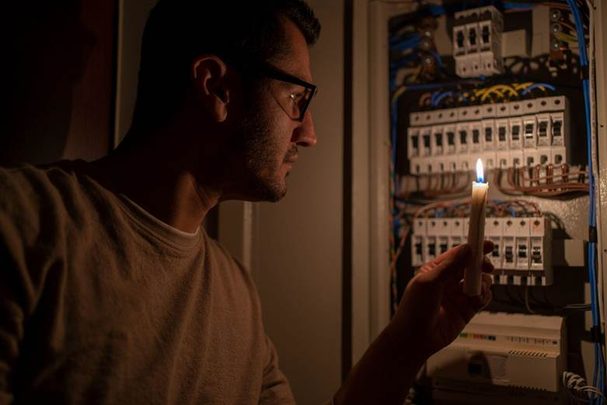
Check whether neighbouring homes are dark before touching anything. If the street is lit and only your property is out, a power outage in house wiring is the likely cause, so open the panel and look for a breaker resting between on and off. Reset it once. If it fails again, or anything smells hot, leave that circuit off and call a licensed electrician.
Introduction
A dark house gets reported to the utility first, and the crew arrives to find nothing on its side to repair. The meter is the dividing line. Everything upstream of it belongs to the distribution company, while the panel, the branch circuits and every receptacle past it belong to the property owner. A power outage in house wiring sits squarely on the owner’s side of that boundary, which is why the first useful diagnostic step happens indoors rather than on the phone.
Urgency then splits the cases in two. A single dead receptacle with no heat, odour or scorch marks can wait until morning. Scorch marks, a faceplate that is hot to the touch or a burning smell near the panel justify calling an emergency electrician within the hour, since overheating conductors inside a wall can reach ignition temperature without ever showing flame.
Why Your House Lost Power and Where to Look First
Two checks settle the question of ownership, and both take under a minute.
The Thirty-Second Check at the Window
Dark street lamps and dark windows next door put the failure on the distribution network, where crews are already dispatched, while windows dark on your property alone put it inside your own service. In Calgary, the utility owns the conductors up to the meter, and everything beyond it belongs to the homeowner.
Where Responsibility Changes Hands
That boundary decides which number to dial, and the wrong call costs an evening.
| Situation | Who handles it |
| Street or neighbourhood outage | Utility |
| Only your home is dark | Electrician |
| Burning smell or visible sparks | Electrician |
| Downed line on the property | Utility, and stay back |
| Half the home dark, handles seated | Electrician |
In practice, anything downstream of the meter stays with the electrician, no matter how the failure began.
Reading the Breaker Bar
A tripped breaker does not always look tripped. Many handles settle into a mid-position that reads as seated from an arm’s length, which is why a quick scan misses them.
- A handle resting between on and off has tripped, and the circuit stays dead until it is pushed firmly off, then back on.
- A breaker that trips a second time is reporting a fault, and further resets only feed current into it.
- GFCI receptacles in bathrooms, garages and exterior walls protect outlets downstream, so one tripped device can darken several rooms.
- The main breaker and any sub-panel sit upstream of every branch circuit and deserve the first look.
- A note of which rooms went dark, and when, helps whoever arrives.
What a Partial Power Outage in House Circuits Tells You
A half-lit home narrows the fault to two main candidates, and they behave very differently.
The Lost Leg and the Dead Half
A residential service arrives as two 120-volt legs that combine to 240 volts across the panel. Lose one leg at the weatherhead or the main lugs, and every circuit on that busbar falls silent while the other half runs as normal. Nothing has tripped, so every handle still reads as seated.
When Lights Brighten in One Room and Dim in Another
An open neutral behaves nothing like a lost leg. With the return path broken, the two legs sit in series across 240 volts, and that voltage divides according to the load on each side, so rooms on the lightly loaded leg climb well above 120 volts while the heavily loaded side sags.
Four signs separate it from an ordinary dead circuit:
- Lights brightening in one room as they dim in another
- Swings that track a furnace or dryer cycling
- Electronics failing one at a time over several days
- Full voltage at some receptacles and sagging voltage at others
The main breaker belongs off until an electrician traces the neutral.
Outlet Stopped Working Breaker Not Tripped: Shared Neutrals and Loose Screws
A single dead receptacle with the panel untouched usually traces to the connection behind the device rather than to the device itself. Push-in terminals hold the conductor against a thin spring that degrades under years of heating and cooling.
On a multi-wire branch circuit, two hot legs share one return conductor, so one loose screw there drops both circuits. Aluminum branch wiring from the 1960s and 1970s loosens faster than copper, and loose terminations arc, a leading cause of house fires.
Preventing a Repeat: Power Outlet Not Working but Breaker Not Tripped
A circuit restored in October fails again in February unless the connection behind it is replaced, and a short maintenance routine closes that gap.
An Intermittent Receptacle Is a Warning
A receptacle that works again after a wiggle has a connection failing under load. Every heating cycle loosens the contact further, and resistance at a loose termination turns current into heat inside a wall cavity. Discolouration around the slots, warmth under the hand or a faint odour means the device is due for replacement rather than observation.
A Maintenance Interval Matched to the Building
Professional practice ties inspection frequency to the age of the service rather than to the calendar.
- Book a full inspection on any home past 25 years of service.
- Have the panel assessed after a run of repeated trips rather than after a failure.
- Replace receptacles showing warmth, discolouration or odour at the first sign.
- Arrange copper pigtailing wherever pre-1980 aluminum branch wiring is present.
- Check smoke alarm manufacture dates, since detectors age out at roughly ten years.
- Fit surge protection at the service to absorb switching transients and lightning energy.
Documentation Shortens Every Future Call
More often, the delay on a night call goes into identifying which circuit feeds the dark room, and a labelled directory removes that step. Calgary winters stack furnace and block heater demand onto circuits that sit idle for half the year, so labelling pays for itself when failures cluster.
Pro Tip: Photograph the open panel with the labels legible and keep the image on your phone, so anyone working the problem at 2 a.m. can isolate the right circuit in seconds.
Partial Outages, Dead Outlets and the Case for Acting Early
The gap between a one-hour repair and a rewire usually comes down to how long a warm receptacle stayed in the wall. Voltage swings, intermittent outlets and half-lit homes all report the same underlying condition: a connection failing under load rather than a device at the end of its life. Treating a power outage in house wiring as a dated, documented event rather than a nuisance gives the next electrician a head start and keeps a small fault small.