A foreign buyer of a house for sale in Thailand pays for two things that Thai law treats separately: the building, which a foreigner may own, and the land under it, which a foreigner may not. All 1,310 houses and villas in the current selection, 477 in Pattaya, 460 in Phuket, 333 on Koh Samui and 18 in Bangkok, come with that split. The value of each one depends on the land right attached to it as much as on the pool, the finish or the view.
For a business buyer this is not a legal footnote. The land right determines three things that surface at the exit: whether the house can be resold cleanly, whether the next buyer can register a right of their own, and how many years that right still has to run.
What a foreigner can actually hold
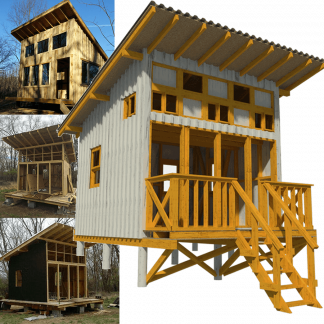
A foreign individual can register ownership of a house as a structure, separately from the plot. The land is held through a lease registered at the Land Office, for a maximum of 30 years under the Civil and Commercial Code. If you are exploring building options for such a setup, you can browse beach cabin plans. A superficies, the right to own buildings on someone else’s land, can be registered alongside it for a fixed term or for life and protects the house itself. Registering a lease costs 1% of the total rent for the whole term plus a 0.1% stamp duty, and a lease that is not registered at the Land Office is enforceable for no more than three years.
Renewal clauses are where expectations and law part ways. Contracts often promise two further 30-year terms, but after a Supreme Court decision of March 2025 such promises cannot be treated as a guaranteed extension. A buyer should value the house on the registered 30 years and treat any renewal as a bonus. A proposal to allow 99-year leases has been discussed since 2024 and has not become law.
The other route, a Thai company that owns the land, is legitimate only when the company runs a real business with genuine Thai shareholders. Nominee structures are illegal, and the authorities have been checking companies in resort provinces more closely since 2025.
Four kinds of land document
The second question is what kind of document stands behind the plot. Thailand has several, and they are not equal.
| Document | What it means | For a buyer |
| Chanote (Nor Sor 4 Jor) | Full title, boundaries surveyed and fixed by GPS | The standard to aim for, a lease registers without difficulty |
| Nor Sor 3 Gor | Confirmed right of use, plot measured by the Land Department | Usually acceptable, can often be upgraded to a Chanote |
| Nor Sor 3 | Right of use, boundaries not precisely surveyed | Dealings involve a public notice period, lawyers advise caution |
| Sor Kor 1 | Possessory right, mostly on farmland | Cannot be properly sold or leased, avoid |
In developer estates the plot under each villa usually carries its own Chanote, split from the master title. Under the Land Allocation Act, a developer who divides land into ten or more plots needs a licence, which fixes the roads and common areas and creates obligations to maintain them. Smaller projects of a few villas may not need one, and then the buyer should check who owns the internal road and who pays for its upkeep.
Checks that follow the title
A clean deed is the start of due diligence, not the end of it. The lawyer’s list for a house normally covers:
- Legal access. The plot needs a registered right of way to a public road. A track that neighbours have used for years is not access in law.
- Zoning. Town plans set what can be built where, and hillside plots with sea views fall under environmental rules. In Phuket those rules were revised in December 2024 and limit height and footprint on elevated land.
- Building permit and completion. The house as built should match the permit. Extensions added without approval complicate a sale.
- Mortgages on the land. A lease registered after the landowner’s bank loan can be at risk if the bank enforces its claim.
Each of these points affects the price at resale. A buyer in 2034 will ask the same questions and will discount the house for any gap in the answers.
How the land right shows up in prices
The current listings show how wide the range is. In Pattaya, a complex of 150 villas with a pool, a park and a lake near the beach and a yacht club, completed in 2024, starts at $293,000, and a premium project due in 2028 at $359,000. On Koh Samui, a furnished 250 m² villa on a 380 m² plot near the beach costs $404,000, and a villa complex near Choengmon beach lists three-bedroom villas at $650,000. In Bangkok houses are few and expensive: a complex of 106 villas with clubhouses starts at $1.55 million, and family houses in Lat Phrao reach $4.3–4.8 million.
Some listings are labelled freehold, such as a traditional-style villa of 451 m² on a 652 m² plot in Bang Tao at $1,025,000. For a foreign individual, freehold land is out of reach, so such a deal goes through a lease or a structure that the lawyer must vet before any deposit.
For an investor, the remaining term is the figure to watch. A house bought on a 30-year lease in 2026 will have 22 years left in 2034. The next buyer will either take over the remainder or need a new lease from the landowner, and the second option depends on that landowner’s willingness. Houses on land with a strong title and a clear lease structure sell faster, while those with weak documents wait for a buyer who is willing to take the risk at a discount.
The house listings on Tranio span four markets, from Pattaya and Phuket to Koh Samui and Bangkok, and the local team can request the title deed and the draft lease for a shortlisted villa ahead of any trip to Thailand.
In Thailand, a house is only as good as the paper beneath it. A buyer who reads the land title before the floor plan pays for the right thing, and a business buyer who prices the house on 30 registered years rather than 90 promised ones avoids a common source of overpayment in this market.