You’ve backed off the compression nut and pulled the fitting free, and the old sleeve is still sitting there, stuck fast on the copper about a half-inch back from the pipe end. (In the UK this ring is called an olive. In the US it’s usually called a ferrule or compression sleeve, and this guide calls it a sleeve.) You pull on it, you pry at it with a fingernail, and it doesn’t move. Getting it off without scoring or bending the copper is the whole job, because that pipe has to seal again. Whether you are doing quick plumbing maintenance or tackling hands-on DIY projects like the enthusiastic builder of the cosy cabin Yvonne, having the right technique prevents unnecessary pipe replacements. There are three reliable fixes: pull the sleeve off with a puller if there is room behind it, split it off with an olive cutter if there is not, or cut the pipe back past it entirely.
Why the sleeve is stuck, and why you can’t reuse it
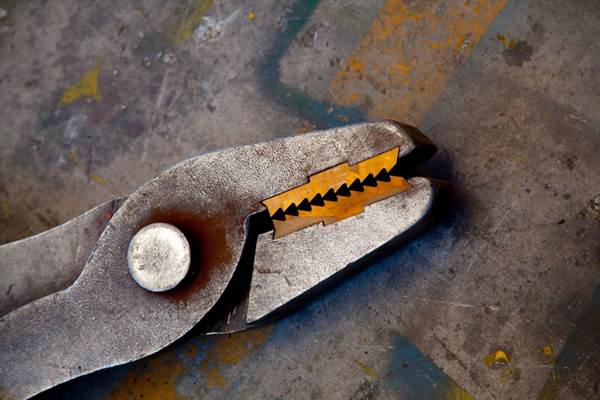
A compression sleeve is designed to be used once. When the joint was first made, tightening the nut drove the sleeve hard against the pipe and into the seat of the fitting, which pressed it into the pipe wall. When you back the nut off and pull the fitting away, the sleeve stays where it is, clamped onto the pipe rather than sitting loose.
That is also why you can’t reuse it. A new sleeve is evenly rounded, so it closes onto the pipe evenly all the way around and seals. A used sleeve has already been pressed into the shape of the old fitting. Fitted again, it rarely seats evenly, and the joint weeps however much you tighten it. Remove it and fit a new one.
The ways people get them off, and where each goes wrong
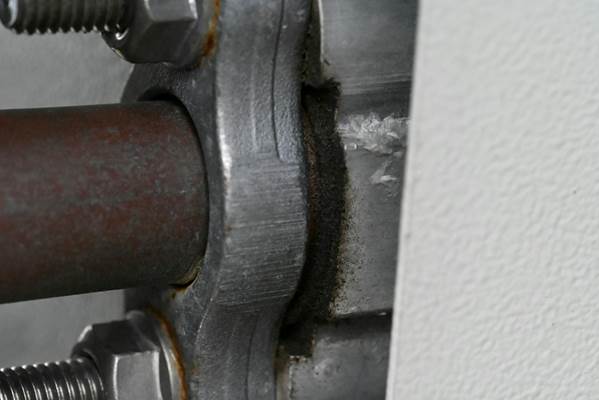
There are four ways people usually go at a stuck sleeve. Two of them can wreck the pipe, and a third needs room you often don’t have.
- Hacksaw or junior hacksaw. You saw along the sleeve until it’s thin enough to crack off. The blade rides right next to the copper, though, and one slip scores the pipe wall. A scored pipe gives the new sleeve an uneven surface to seat on, and the new joint weeps. If you saw at all, stop short of the copper and crack the last sliver off; never cut down to the pipe.
- Pliers and twisting. You grab the sleeve, twist, and try to walk it off the end. On a sleeve that’s truly stuck, it spins under the jaws and rounds over, or the pliers slip and chew the pipe. Now the sleeve grips harder than before and the copper under it is marked.
- A two-part puller. This slips behind the sleeve and draws it off the end as you tighten it. On an open pipe end with clear copper behind the sleeve, it works cleanly. The catch is the room it needs behind the sleeve: you rarely have it on a fitting tight to a wall or a joist.
The clean answer is a dedicated sleeve cutter (also sold as an olive cutter). You close its small blade onto the sleeve and it splits the sleeve in place; done right, the split sleeve peels off and the copper underneath comes out unmarked.
Where the sleeve sits tight to a wall or a joist, Maun makes a good compact screw-type olive cutter that works well in tight spaces. You can see it in their olive cutters range. It comes in 15 mm and 22 mm sizes (models 5649-100 and 5653-100), and you turn a screw to drive the blade into the sleeve instead of squeezing a pair of handles, so it needs no room for handles to open.
You do not always need the cutter. On an easy, accessible pipe end with room to work, the cheap two-part puller does the job fine. The cutter matters on pipe close to walls, on work you repeat across a build, and on any run where you can’t risk damaging the pipe.
Sleeve removal tools are sized to the pipe, not universal. UK compression runs on 15 mm and 22 mm pipe; US nominal half-inch copper measures about 16 mm (5/8 in) outside, which is not the same thing. Measure the pipe’s outside diameter with calipers and check the tool’s stated sizes cover it, because a cutter for the wrong size won’t seat on the sleeve. If your pipe measures the US 5/8 in (about 16 mm), check the maker’s size list actually includes it before ordering; not every metric range does.
Tip: write the measured outside diameter down before you shop; sizes that sound the same, like 15 mm and 5/8 in, are not the same pipe.
When cutting the pipe back is the better move
Sometimes the smart move is not to remove the sleeve at all. If the pipe has spare length, enough that you can lose an inch or two and still reach the fitting, cut the pipe back past the stuck sleeve and start with a fresh end. A square cut with a pipe cutter gives you round, unmarked copper for the new sleeve to seat on, and you skip the stuck sleeve entirely. Only go to the trouble of removing the sleeve when the pipe has no length to spare.
Removing the sleeve with a sleeve cutter, step by step
1. Make sure the line is dead. If the water is not already off and drained, close the shutoff valve feeding the pipe, open the lowest faucet or fitting on that run, and let the pipe empty. Even a dead leg (a capped-off run) can hold water.
2. Support the pipe. Hold the pipe steady so it can’t flex while you work: by hand, in a soft-jawed vise, or against a solid backing. A pipe that moves as you cut gives a ragged split and risks a slipped blade.
3. Position the cutter over the sleeve. Set the cutter so its blade sits on the sleeve, not on the pipe, and square to the run.
4. Tighten or squeeze until the sleeve splits. Work the cutter down in steady turns, or squeeze it, depending on the tool. You’ll feel the blade bite the sleeve and then give as the sleeve splits along its length. Stop there; no need to drive the blade any further.
5. Peel the split sleeve off. Once it’s split, the sleeve opens up and comes off the end, often in one piece. If it’s snug, twist the split open a little and slide it off by hand.
6. Dress the pipe end. Wipe the copper clean, then take fine emery cloth to the spot where the sleeve sat. You want smooth, round, bright pipe with no ridge left behind.
7. Check the pipe, then fit the new sleeve. Run the checks below first, then slide the nut on, a fresh sleeve after it, and make up the joint to the new fitting.
Check the pipe before you rebuild the joint
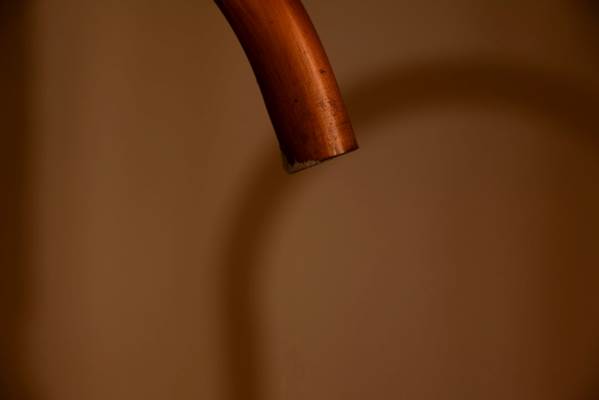
Run three checks on the stretch of pipe where the new fitting will sit:
- Scoring. Run a fingertip and your eye around the pipe. Any groove where the sleeve has to seal will let the joint weep. Light marks can sand out; a deep score means cutting back to clean pipe.
- Ovality. If someone’s been at the pipe with pliers, the round can be squeezed to an oval. A sleeve seals on round pipe; on an oval section it seats on the high spots and leaks on the low ones. Measure across the pipe in two directions with calipers; more than a small difference means it has gone oval.
- Enough straight pipe. The nut and sleeve need straight, unbent pipe to grip; make sure the fitting can seat fully past any bend and past where the old sleeve sat.
Plastic and chrome-plated pipe
Two kinds of pipe need extra care. Compression joints on plastic pipe use a pipe insert inside the pipe and a softer sleeve, so go gently: a blade meant for copper can cut straight through the softer sleeve and into the plastic. On chrome-plated copper, the shine of the plating can hide a groove, so check the surface by fingertip as well as by eye before you rebuild the joint.
FAQ
Can you reuse an olive on a copper pipe?
An olive that has been compressed once almost never seals again. The nut deformed its sealing face to that one joint. Put it back, in a new spot or against a new fitting, and it rarely seats evenly, so the joint weeps. Cut the old sleeve off and fit a new one instead.
How do you get a ferrule off a copper pipe without damaging it?
The surest way to get the ferrule (the sleeve) off is a dedicated sleeve cutter sized to the pipe: it splits the sleeve in place and, done right, leaves the copper unmarked. On an accessible pipe end with room behind the sleeve, a two-part puller works too. And if the pipe has spare length, cutting back to a fresh end is often the easiest fix of all. Avoid sawing down to the pipe or twisting with pliers; both mark the copper.
Do you need a special tool to remove a compression olive?
Not always, but it’s the safe bet. On an easy pipe end you can manage with a two-part puller, or skip removal by cutting the pipe back. Where there is no room behind the sleeve and no spare pipe to cut back, the dedicated sleeve cutter is the safe route.