When designing or renovating a cabin, preserving the surrounding natural views—whether of dense pine forests, mountain ranges, or tranquil lakes—is priority number one.
While traditional wood balusters offer a classic rustic feel, they often obstruct scenic landscapes and require ongoing maintenance. Cable railings offer the ultimate solution: they deliver structural safety while virtually disappearing into the background.
In this guide, we explore why cable railing is the premier choice for cabins, and share 7 inspirational design ideas.
Note on Project Photography: All deck and cabin project photography featured in this guide is provided courtesy of BLIKA Cable Railing, showcasing real-world residential and off-grid cable railing installations using marine-grade T316 cable and hardware.
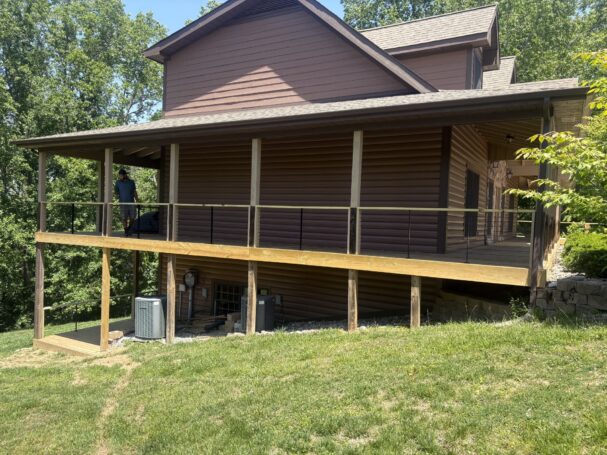
Why Cable Railing is the Ultimate Choice for Cabins
Building or renovating a mountain cabin, lakeside lodge, or off-grid retreat revolves around one central element: connecting with the outdoors. However, choosing the right deck railing often presents a dilemma between safety, aesthetics, and long-term durability.
While traditional vertical wood spindles or glass panels are common choices, cable railing systems have emerged as the gold standard for modern cabin design. Here is why cable railing outperforms traditional materials in cabin environments:
1. Unobstructed Views
The primary reason to build a cabin deck is to enjoy the surrounding forest, mountains, or water. Traditional wooden or composite balusters act as a visual wall, blocking up to 40% of your sightline—especially when seated. Slim 1/8″ stainless steel cables provide over 95% unobstructed visibility, creating a seamless transition between your living space and nature.
2. Exceptional Weather Resilience in Harsh Climates
Cabins are frequently exposed to severe weather conditions, including heavy winter snow, high-altitude UV radiation, intense rain, and temperature fluctuations that cause timber to expand and contract. High-grade T316 marine-grade stainless steel cables and fittings (such as BLIKA’s T316 hardware line) resist pitting, atmospheric chloride corrosion, and rust far better than painted iron, aluminum, or bare wood.
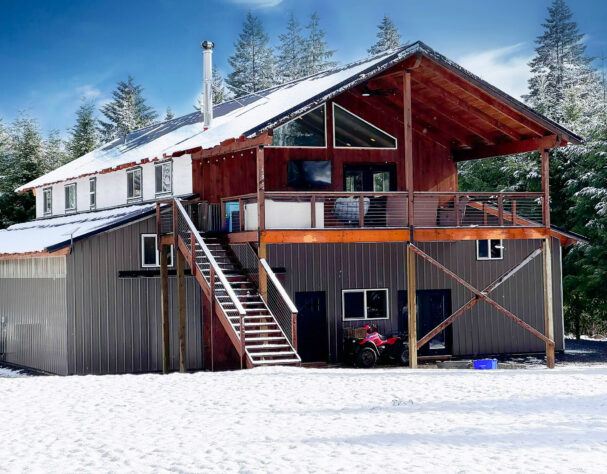
3. Minimal Maintenance Required
Maintaining a wooden deck railing on a remote or seasonal cabin is labor-intensive, requiring frequent sanding, staining, and sealing to prevent rot. Glass railings, on the other hand, constantly accumulate pollen, dust, snow streaks, and handprints. Cable railings require virtually zero structural maintenance—an occasional wash with mild soap and water is all it takes to keep the steel pristine for decades.
4. High Tensile Strength for Mountain Safety
Safety is paramount on elevated multi-story decks or steep cliffside cabins. Cable railing systems engineered with 7×19 strand stainless steel wire ropes offer superior tensile strength (often exceeding 1,800 lbs of breaking strength per line). When properly tensioned to comply with International Residential Code (IRC) standards, they easily handle heavy wind loads, falling tree debris, and snow accumulation without snapping or bending.
5. Modern-Rustic Aesthetics
Cable railing offers unparalleled architectural versatility. Whether paired with rugged 6×6 Cedar posts for a classic timber-frame look, or paired with sleek matte black stainless steel posts for a modern A-frame design, cable infill enhances the natural warmth of wood without making the structure look outdated.
6 Top Cabin Cable Railing Design Ideas
1. Nature Wood Frame with Cable Infill
For cabins that demand the organic, warm touch of real wood under hand, pair continuous timber top rails and heavy 4×4 or 6×6 wood posts with horizontal steel cable runs.
- The Aesthetic: Authentic, classic timber-frame aesthetic with an upgraded, open sightline beneath the handrail.
- Key Pro-Tip: Match the post stain to your cabin’s exterior cladding or deck boards for visual continuity. Always use stainless steel protector sleeves at wood post transition holes to prevent tensioned wire from cutting into soft timber.
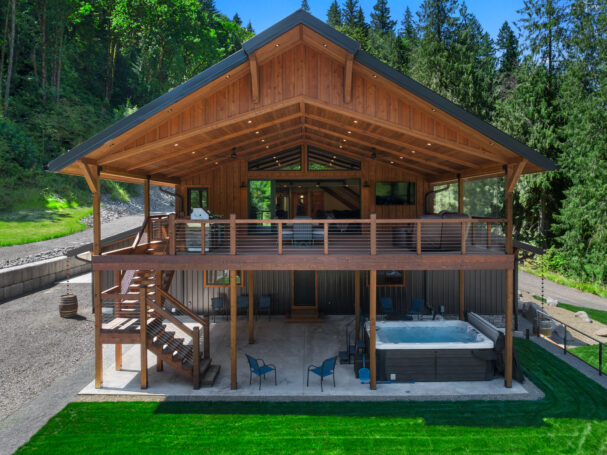
2. Industrial Matte Black Powder-Coated Steel Railing
For modern cabins and A-frame designs, drop wood entirely in favor of an all-metal system. Black steel posts, matching top rails, and thin cable infill give off an industrial loft aesthetic that anchors the cabin’s exterior against forest backdrops.
- The Aesthetic: Pair matte black powder-coated stainless steel posts with 1/8″ stainless steel cables. The black frame creates a bold architectural outline against forest backdrops, while the cables disappear into the trees.
- Pro Tip: Ensure base posts are crafted from structural stainless steel rather than thin painted aluminum to withstand heavy mountain snow drifts.
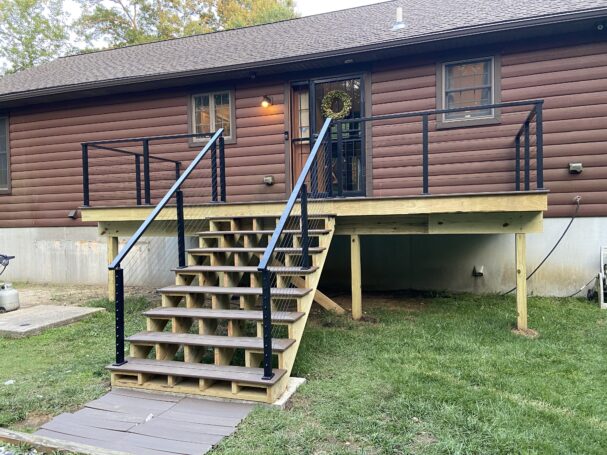
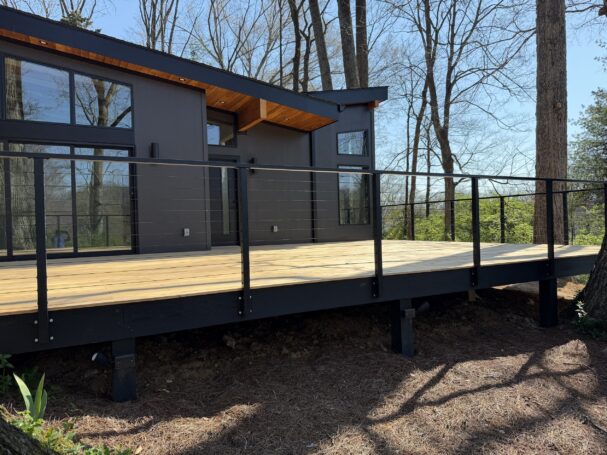
3. Fascia Mount Minimalism: Maximize Deck Square Footage
In compact cabin layouts and tiny homes, top-mounting posts on floorboards can consume valuable usable deck space.
- The Aesthetic: Anchor posts directly to the side fascia (rim joist) of the deck frame. This creates a floating, rimless balcony profile and leaves 100% of the walkable deck surface open for lounge furniture.
- Pro Tip: Ensure robust double-joist blocking behind the fascia board to handle the lateral tension exerted by the cable lines.
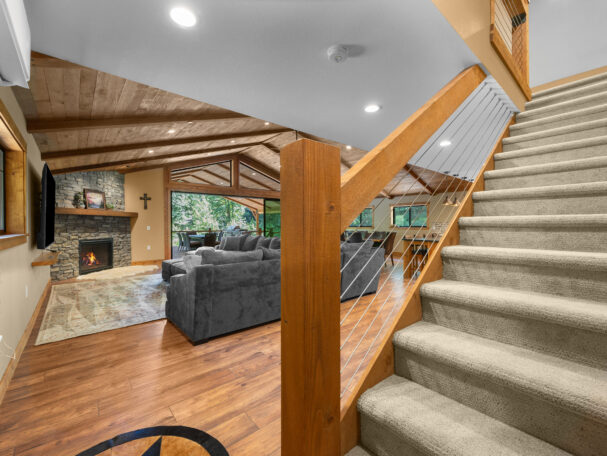
4. Indoor Loft Staircases & Mezzanines
In compact cabin layouts, traditional solid stair risers and thick balusters can block natural light, making open-plan living rooms feel small and dark.
- The Aesthetic: Replacing interior stair spindles with tensioned wire rope allows sunlight from floor-to-ceiling gable windows to flow freely across upper lofts and lower hearth areas.
- Bonus: It gives indoor mezzanine walkways a floating, airy aesthetic.
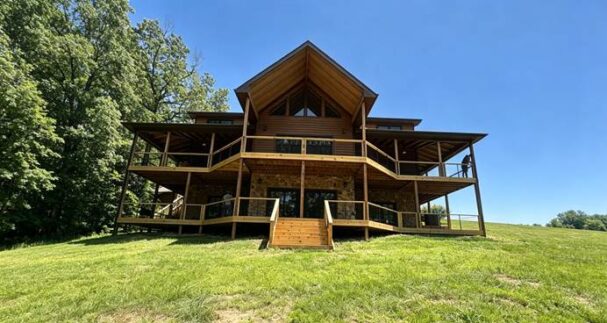
5. Multi-Level Deck Transition Runs
If your cabin rests on a sloped mountain lot with multi-level decks and exterior access stairways, visual continuity across elevation changes is key.
The Aesthetic: Horizontal cable lines naturally follow stair angles and landing transitions without breaking visual momentum, keeping complex multi-level deck structures looking clean rather than cluttered.
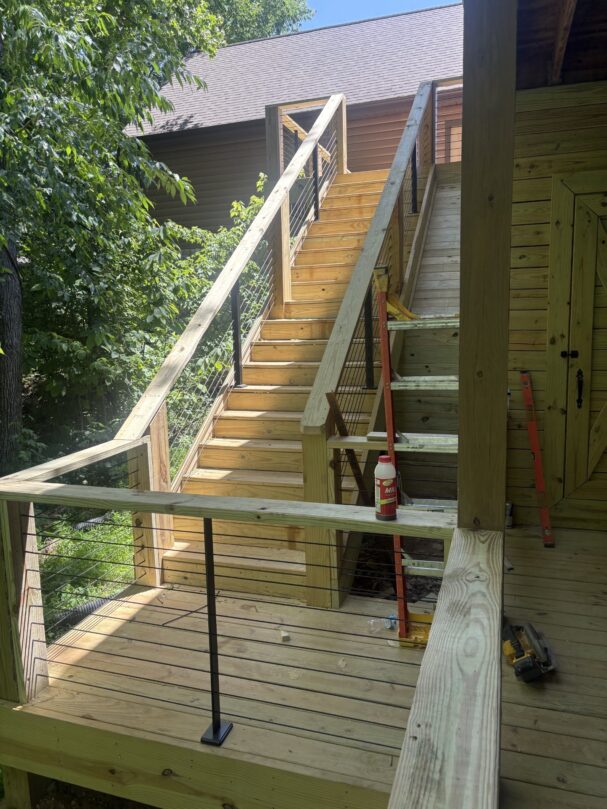
6. Invisible Hardware for Ultra-Clean Post Terminals
To elevate the craftsmanship of your cabin deck, choose invisible swage fittings or internal tensioning hardware that hides entirely inside the end posts.
The Aesthetic: Eliminates exposed turnbuckles, nuts, and bulky hardware on exterior post faces, leaving a flush, custom-built finish that highlights the raw beauty of the wood or metal posts.
Technical Considerations for Cabin Cable Railings
To ensure your cable railing installation survives harsh mountain winters and passes local building inspections, adhere to these fundamental technical rules:
- Use Marine-Grade T316 Stainless Steel: Always specify T316 stainless steel for wire rope and tensioning hardware to prevent rust and corrosion in outdoor environments.
- Ensure Heavy Post Blocking: Cable systems exert significant pull force on structural end posts. Ensure all corner and end posts are anchored to the deck frame with heavy structural lumber blocking.
- Maintain 3-Inch Cable Spacing: Space cable rows no more than 3 to 3 1/8 inches apart vertically to satisfy the standard 4-inch sphere building code safety test.
- Keep Posts ≤ 4 Feet Apart: Keep intermediate post spacing to a maximum of 4 feet to prevent cable deflection when pushed.
FAQs
Q: What is the best cable railing material for mountain cabins?
A: The gold standard for cabin cable railings is Grade 316 stainless steel for the cable wires, paired with either pressure-treated timber/cedar or powder-coated aluminum posts. Grade 316 offers superior resistance to corrosion caused by snowmelt, humidity, and atmospheric moisture compared to standard 304 stainless steel.
Q: How much does cabin cable railing cost per linear foot?
A: On average, cabin cable railing systems cost between $60 and $150 per linear foot for materials alone, depending on post material choice (wood vs. aluminum vs. steel). Professional installation typically adds $30 to $70 per linear foot, bringing the total turn-key cost to roughly $90 to $220 per linear foot.
Q: Do cable railings require a lot of maintenance in heavy snow?
A: No. Cable railings actually require far less snow clearance maintenance than traditional solid balusters or glass panels, as snow passes straight through the open wire runs without building up massive lateral pressure against the deck frame.
Conclusion
Upgrading your cabin deck or interior loft with horizontal cable railings effortlessly balances modern safety standards with rustic architectural heritage. Whether you prefer warm cedar posts, space-saving fascia mounts, or sleek black industrial framing, cable infill secures your living space while keeping your eye trained on what matters most: the majestic wilderness outside.
About BLIKA Cable Railing
BLIKA is a specialized manufacturer of premium architectural cable railing systems, focusing on premium, DIY-friendly, and budget-friendly cable railing kits, T316 marine-grade stainless steel hardware, and comprehensive railing components. Designed for modern residential decks, mountain cabins, and coastal retreats, BLIKA provides high-tensile, code-compliant hardware solutions that combine structural safety with unobstructed architectural views.
For detailed engineering specs, hardware kits, project design, and price estimates, visit the official BLIKA website.