
Owning a home with a working fireplace is a wonderful feature. It’s always a good idea to sit around a cozy fire on a chilly night with your loved ones, whether your home is in a cold northern climate or one with mild winters. However, a fireplace is a controlled fire right inside your living room. To keep that fire safe and ensure your home is protected, you need to get the system checked and cleaned regularly.
In Los Angeles, a fireplace can sit untouched for most of the year, which makes it easy to assume there’s nothing to inspect. But creosote buildup, nesting debris, and flue damage don’t pause just because the fireplace hasn’t been used.
Many homeowners feel a little intimidated by the idea of hiring a chimney sweep company, worried it’ll turn into more of a hassle than it’s worth. Will there be a mess? How long will it take? What exactly is the problem? Working with an established Los Angeles chimney sweep usually puts those worries to rest before the appointment even starts, because a good company will walk you through what to expect, from how they will protect your furniture near the chimney to how long it will take them to finish the job. Once you know what’s coming, the appointment itself is an easy task to check off your home maintenance list.
Step 1: Protecting Your Living Room
The most common worry people have is that cleaning a chimney will leave their home covered in black soot. In reality, modern cleaning methods are very clean and highly focused on dust control. Before any actual sweeping begins, the worker will carefully prepare the area around your fireplace so your home stays spotless.

They will place heavy canvas drop cloths to keep damage to your floor, rugs, and nearby furniture to a minimum. Afterwards, they will set up a powerful vacuum system around the fireplace opening. It stays running the entire time they’re working, pulling loose soot and debris out of the air before it can drift into your room. A professional will always leave your home as clean as they found it.
Step 2: The Visual Check
Once your home is protected, the visual check begins. The worker will typically first examine the firebox – the physical space in which you build the fire. They examine the bricks and the cement that holds them together for any cracks or loose bricks, or deep heat damage. Next, they will look at the damper. The damper is the metal door that opens and closes to let smoke out. It should open easily and close securely so that your home’s heating and air conditioning systems don’t blow up the chimney while you’re away.
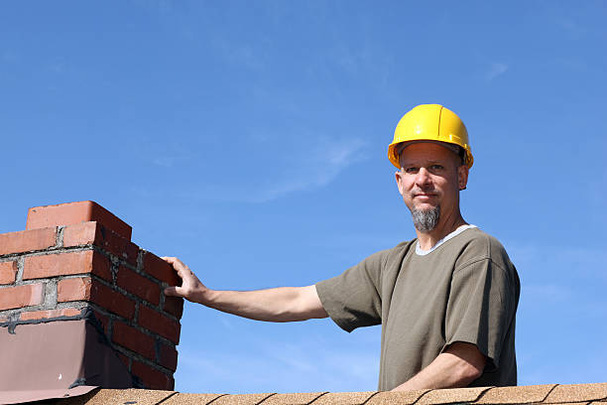
From there, they move to the roof to check the exterior brickwork and the chimney cap. This metal cover keeps rain, leaves, and birds from getting into the flue. If the cap is missing or damaged, replacing it is usually their first recommendation, since it’s a simple fix that prevents costly water damage down the line.
Step 3: Sweeping the Inside
If the chimney is dirty, the physical sweeping begins. The primary aim here is to eliminate soot and a hazardous and sticky material known as creosote. Over time, creosote accumulates whenever you use wood. However, if it becomes too thick, it has a tendency to catch fire within the chimney walls, and that is a significant contributor to house fires.
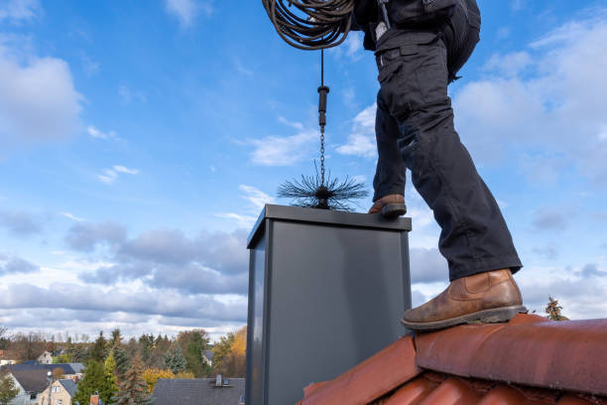
To remove this sticky buildup, the worker uses stiff brushes attached to long, flexible poles. They run these brushes up and down the entire flue, scrubbing loose the soot and creosote clinging to the walls. While brushing, dirt falls into the firebox and is safely vacuumed up by the heavy-duty vacuum. This clears the tunnel, allowing smoke to flow freely and safely out of your house the next time you light a fire.
Step 4: The Camera Inspection
Clearing the chimney is just half the work. It’s a good idea to inspect for concealed damage as well. In the past, workers just used flashlights to try to see up a dark chimney, which missed a lot of hidden cracks. By using a special video camera, a thorough professional today will be able to see the entire length of the inside walls.
They take this camera from the top and observe the live video on a small screen. The camera can pick up tiny cracks or water damage that would be easy to miss from the ground. Keeping your house safe means making sure the interior lining stays crack-free — that’s what keeps the fire’s intense heat from reaching the wooden frame of your home.
Step 5: The Final Report
At the end of the appointment, the worker will give you a full report — what they found, photos of any problem areas, and whether anything needs repair. The whole process usually takes an hour or two, with no guesswork left for you to figure out.
Conclusion
The professional chimney sweep appointment is a simple, clean, and straightforward process. So spending a couple of hours once a year to get your fireplace swept and inspected is a giant stride towards protecting your property. Knowing exactly what condition your system is in gives you total peace of mind. That confidence means you can enjoy your fireplace all season long without a second thought about what might be happening behind the bricks.